


Guide d'achat : bracelet tennis (Canada)
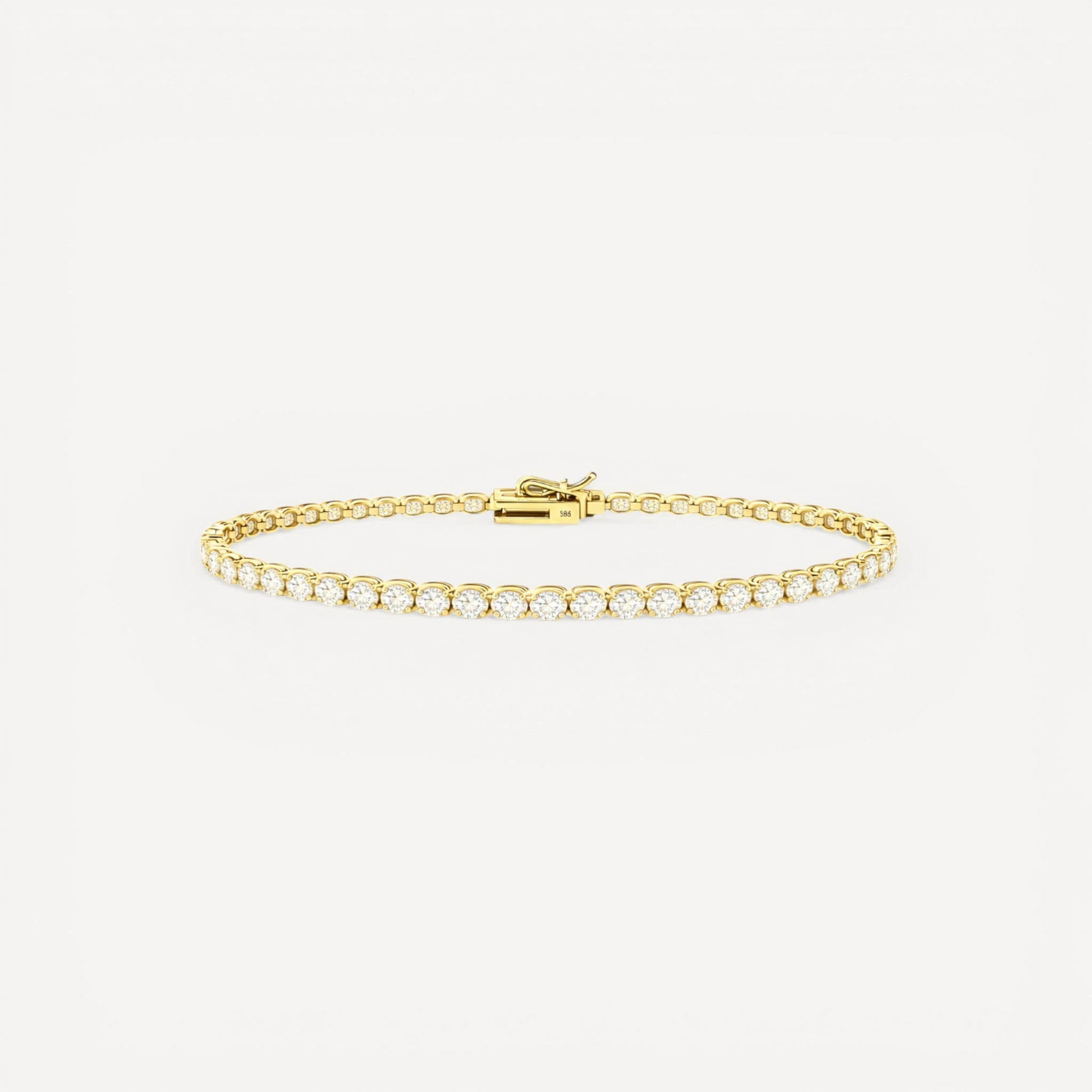
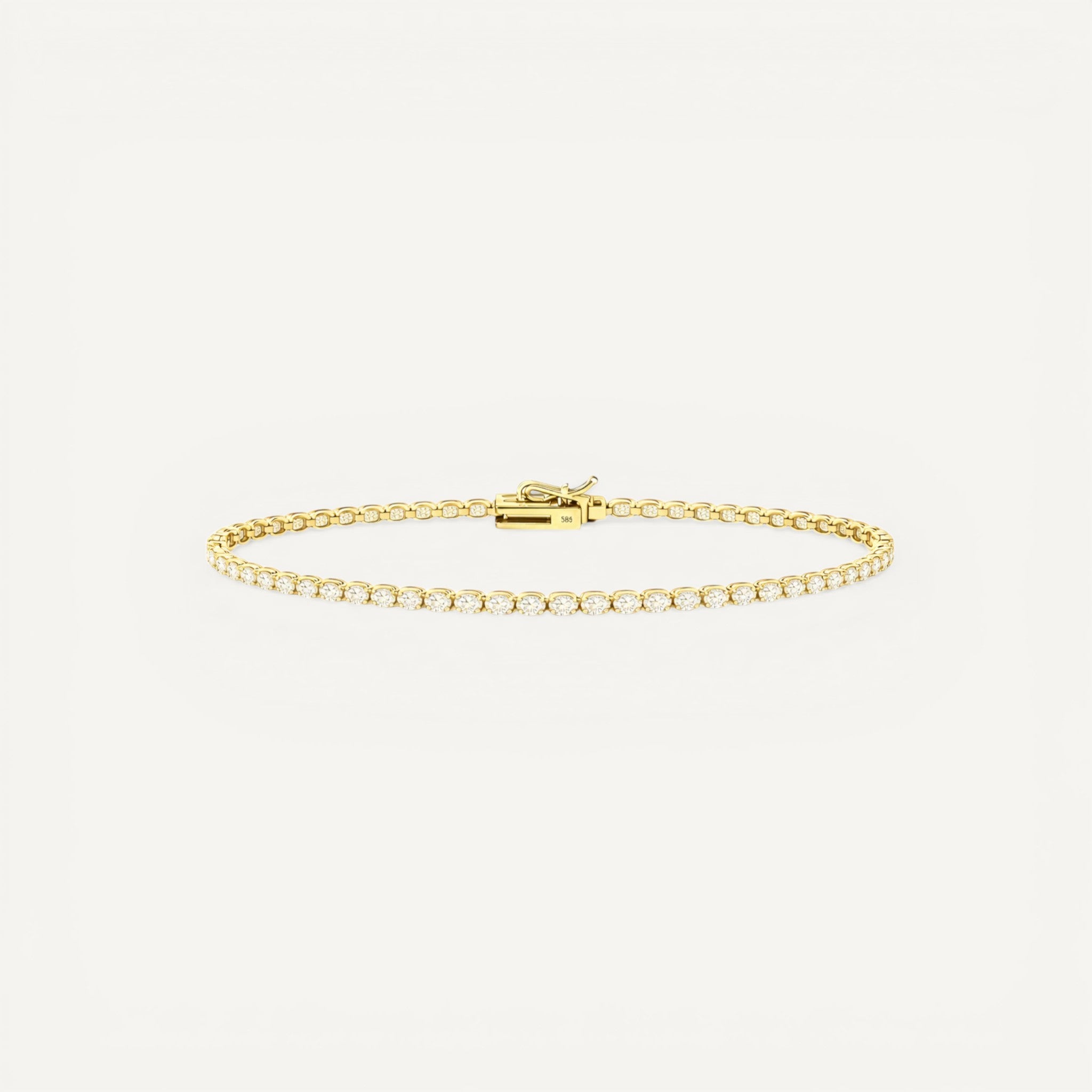
Le bracelet tennis est une ligne continue de pierres assorties serties dans une rangée flexible en or massif — simple, lumineux, et conçu pour être porté tous les jours plutôt que réservé aux grandes occasions. C'est l'une des rares pièces qui s'accorde aussi bien avec un t-shirt qu'avec une tenue plus habillée. Si vous magasinez votre premier (ou si vous passez à un modèle supérieur), voici ce qui compte vraiment, expliqué clairement.
Les quatre éléments qui comptent vraiment
La plupart des bracelets tennis se ressemblent sur une photo. La différence que vous ressentez en le portant repose sur quatre choses : les pierres, le métal, l'ajustement et le fermoir.
1. Les pierres
Vérifiez si les pierres sont bien assorties et si chacune est solidement maintenue dans sa sertissure. Un bon bracelet présente des pierres de taille et de couleur uniformes sur toute la longueur, avec des sertissures qui retiennent chaque pierre sur quatre griffes ou dans un canal, sans accrocs ni jeu. Quelle que soit la nature des pierres, la qualité de la sertissure est ce qui permet au bracelet de rester beau pendant des années — chaque page produit indique les détails exacts des pierres pour vous permettre de comparer honnêtement.
2. Le métal — et pourquoi nous n'utilisons que l'or massif
C'est là que les acheteurs en ligne se trompent le plus souvent. Beaucoup de bracelets ne sont recouverts que d'une mince couche d'or sur un métal de base moins coûteux, qui s'amincit au fermoir et le long des maillons là où les frottements sont les plus importants. Les nôtres sont en or massif 10K ou 14K jusqu'au cœur — un or karaté véritable qui conserve sa couleur, ne nécessite jamais de re-placage et ne laisse pas de trace verte. Sur une pièce que vous portez chaque jour et qui fléchit constamment, le métal massif est ce qui distingue un bijou durable d'un bijou qui s'efface.
3. Longueur et ajustement
Un bracelet tennis doit reposer avec environ la largeur d'un doigt de jeu — assez ajusté pour ne pas tourner ni glisser par-dessus la main, assez souple pour bouger. La plupart des femmes sont à l'aise autour de 7 pouces ; si votre poignet est plus petit ou plus grand, vérifiez les mesures en millimètres sur la page produit. Un bracelet légèrement trop grand est la raison la plus fréquente pour laquelle une pierre accroche et un fermoir cède.
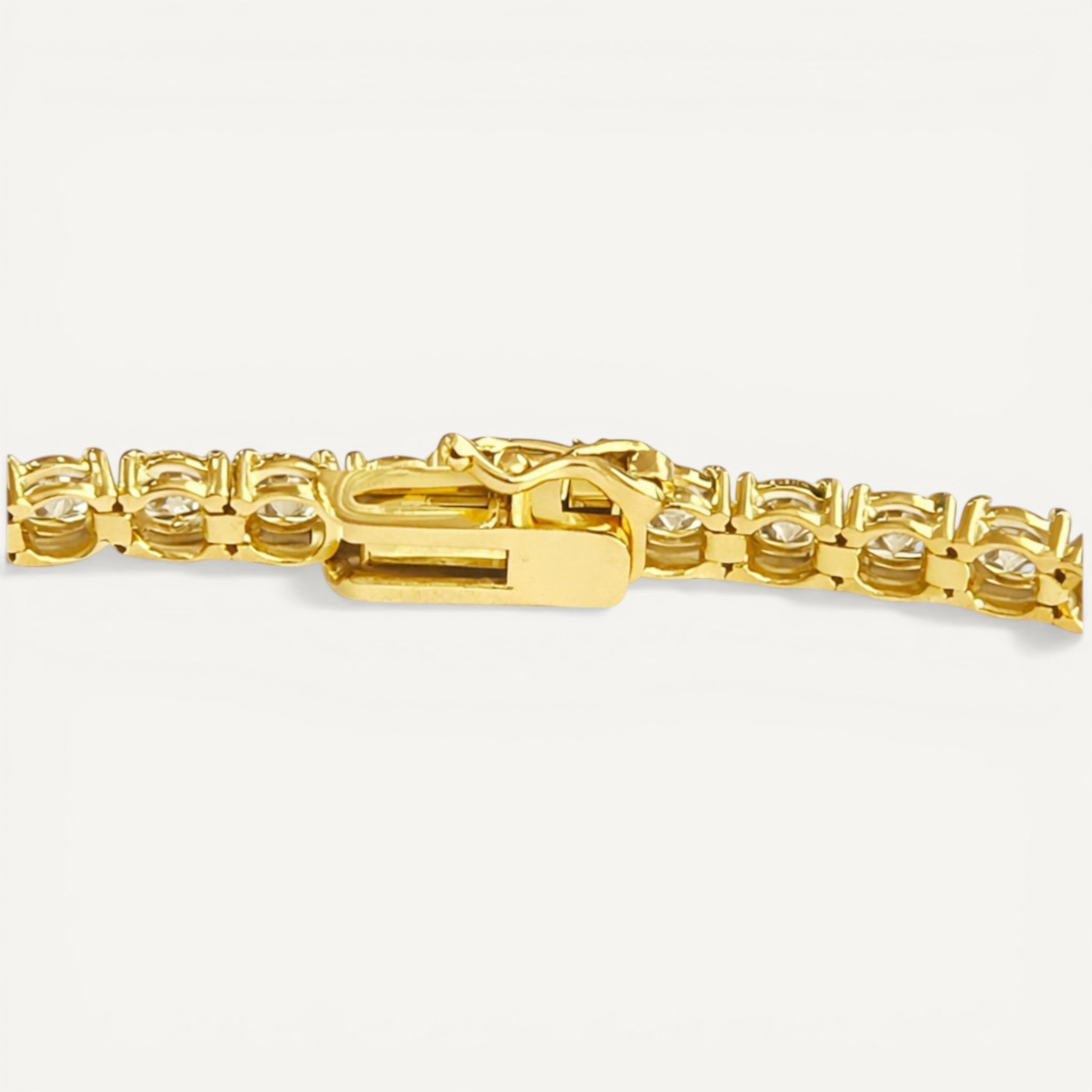
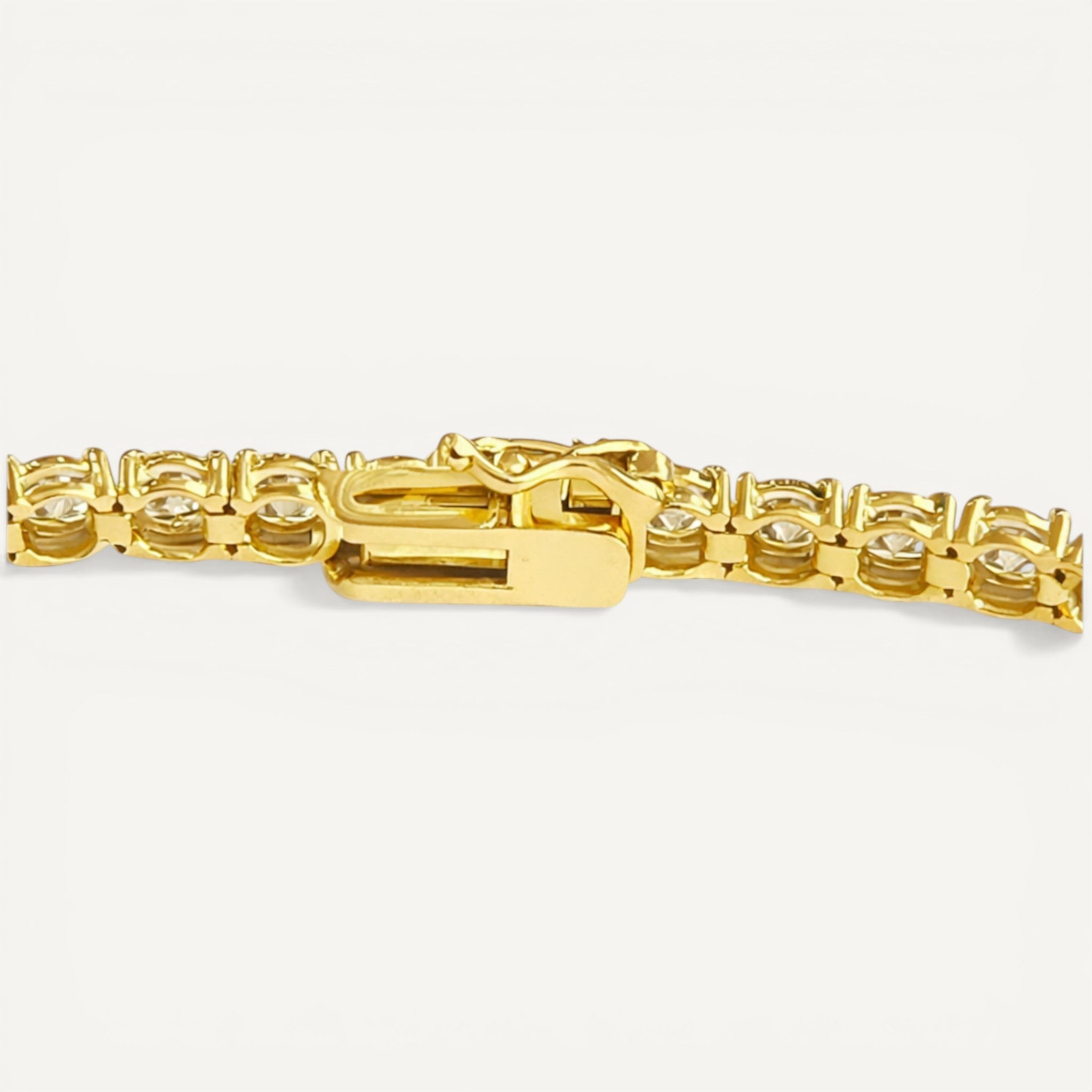
4. Le fermoir
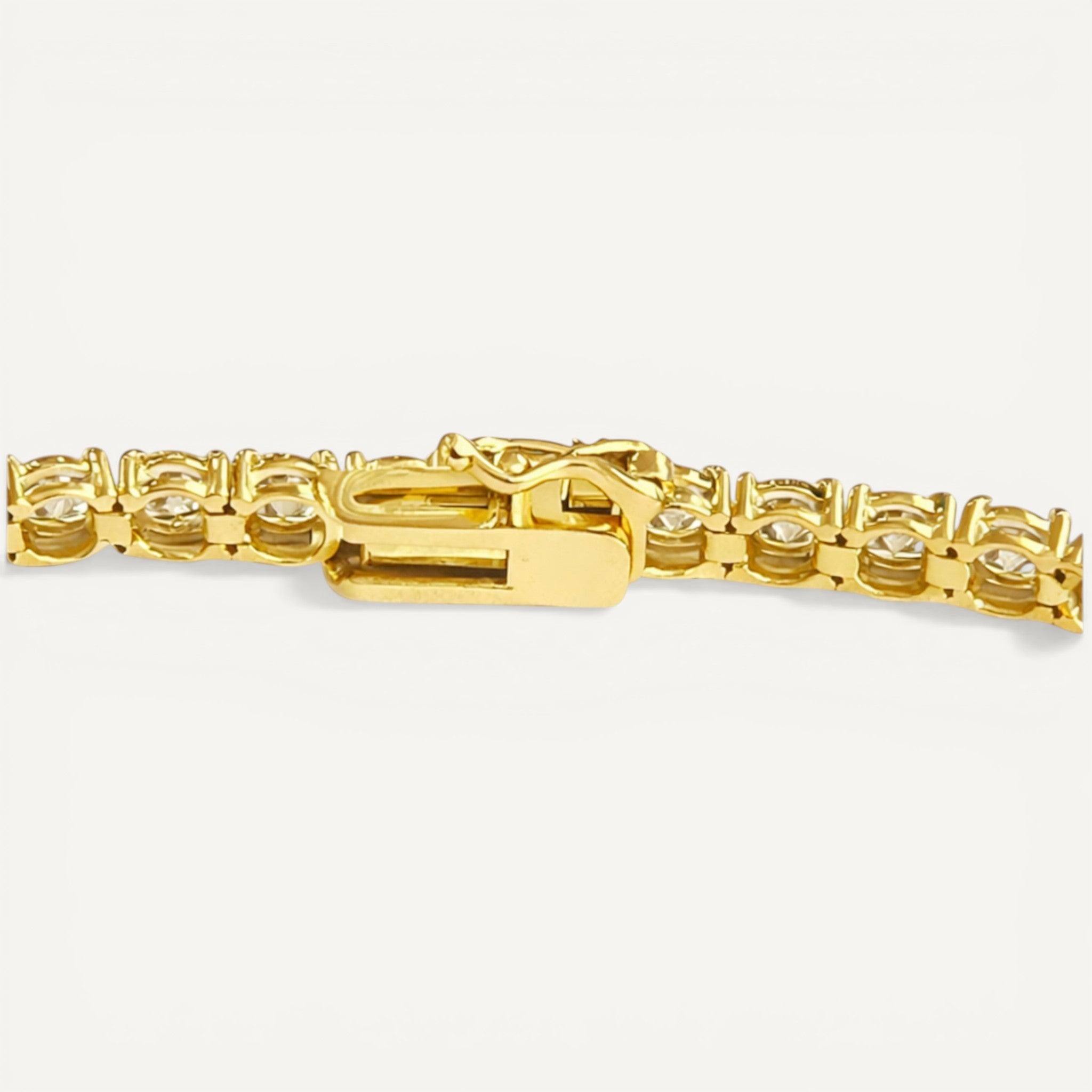
Le fermoir est la seule pièce qui fait tout le travail, et c'est donc celle qui compte le plus. Recherchez un fermoir boîte avec un loquet de sécurité (une petite attache en forme de huit ou repliable) pour qu'un simple choc ne puisse pas l'ouvrir. Cela vaut la peine de manipuler le fermoir avant de décider : il doit se fermer avec un clic net et ferme.
Or massif 10K ou 14K pour un bracelet tennis ?
Les deux sont de l'or massif et les deux sont de bons choix — ils se comportent simplement un peu différemment. Le 14K contient plus d'or pur, donc la couleur est légèrement plus chaude et la pièce paraît un peu plus précieuse. Le 10K contient un peu moins d'or, ce qui le rend plus dur et plus résistant aux égratignures, et il coûte moins cher. Pour un bracelet qui prend des coups au quotidien contre les bureaux et les poignées de portes, le 10K est un choix solide et pratique ; le 14K est superbe si vous souhaitez la couleur plus chaude et que vous êtes prêt à y apporter un peu plus de soin. Ni l'un ni l'autre n'est « meilleur » — ils conviennent à des vies différentes.
En prendre soin
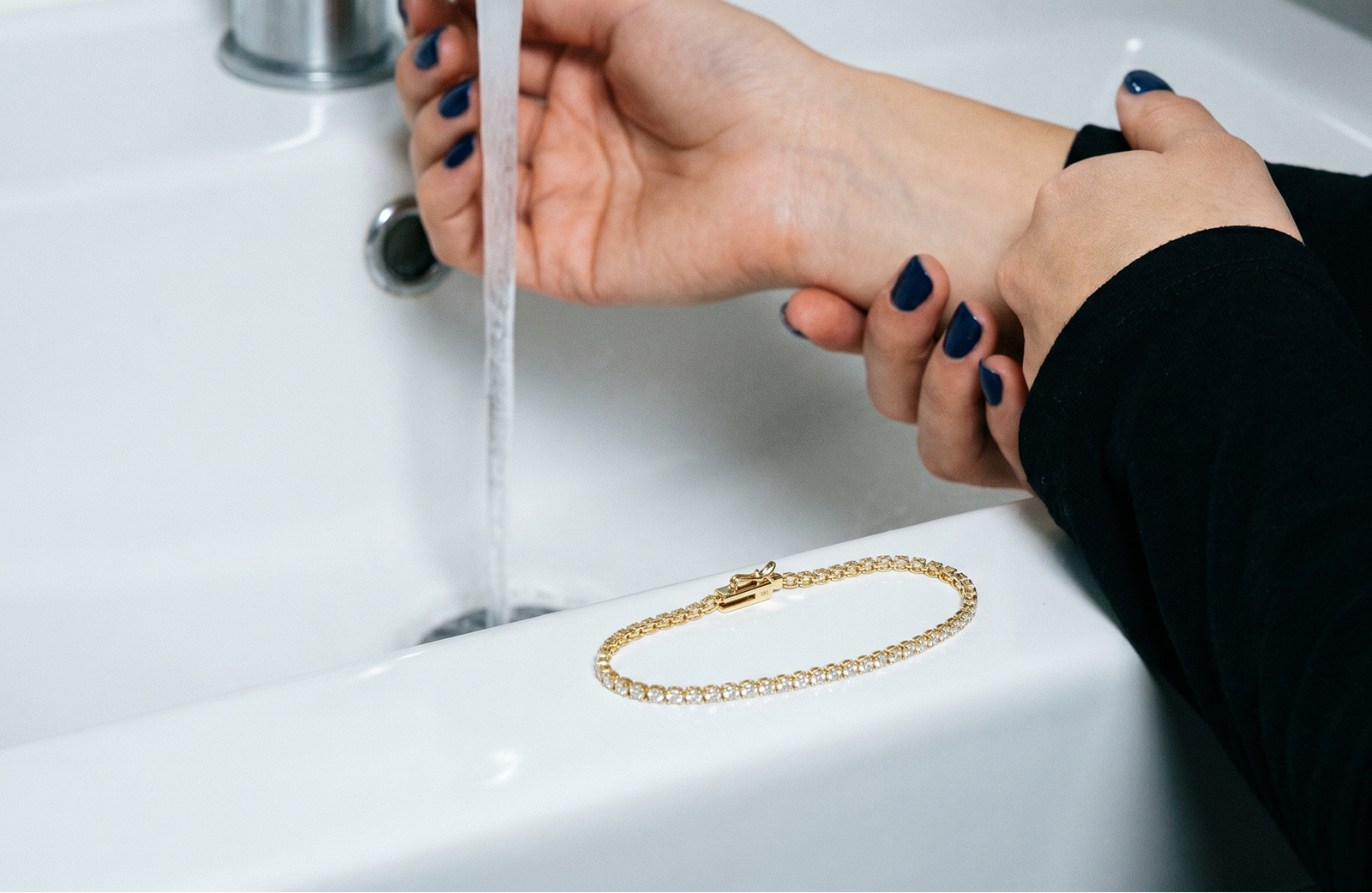
L'or massif demande peu d'entretien, mais un bracelet tennis mérite une attention particulière parce qu'il fléchit beaucoup. Une fois par mois, vérifiez que chaque griffe est bien en place et que le fermoir se verrouille fermement. Nettoyez-le avec de l'eau tiède, une goutte de savon à vaisselle doux et une brosse à dents souple, puis séchez-le avec un tissu non pelucheux. Retirez-le avant la salle de sport, la piscine et le jardinage — non pas parce qu'il serait endommagé, mais parce que c'est là que les fermoirs accrochent et que les pierres reçoivent des chocs.
Prêt à magasiner ?
Chaque bracelet de notre collection de bracelets tennis est en or massif 10K ou 14K, avec la qualité de sertissure et de fermoir décrite ci-dessus, et chaque page produit indique les détails exacts des pierres, le métal, la longueur et le poids pour comparer honnêtement. Si vous aimez ce style en version plus longue, le même modèle vaut la peine d'être vu dans nos colliers tennis. Des questions avant d'acheter ? Écrivez-nous à info@jewelrytoremember.com et nous vous aiderons à choisir.
Magasinez ce guide
Magasiner la collection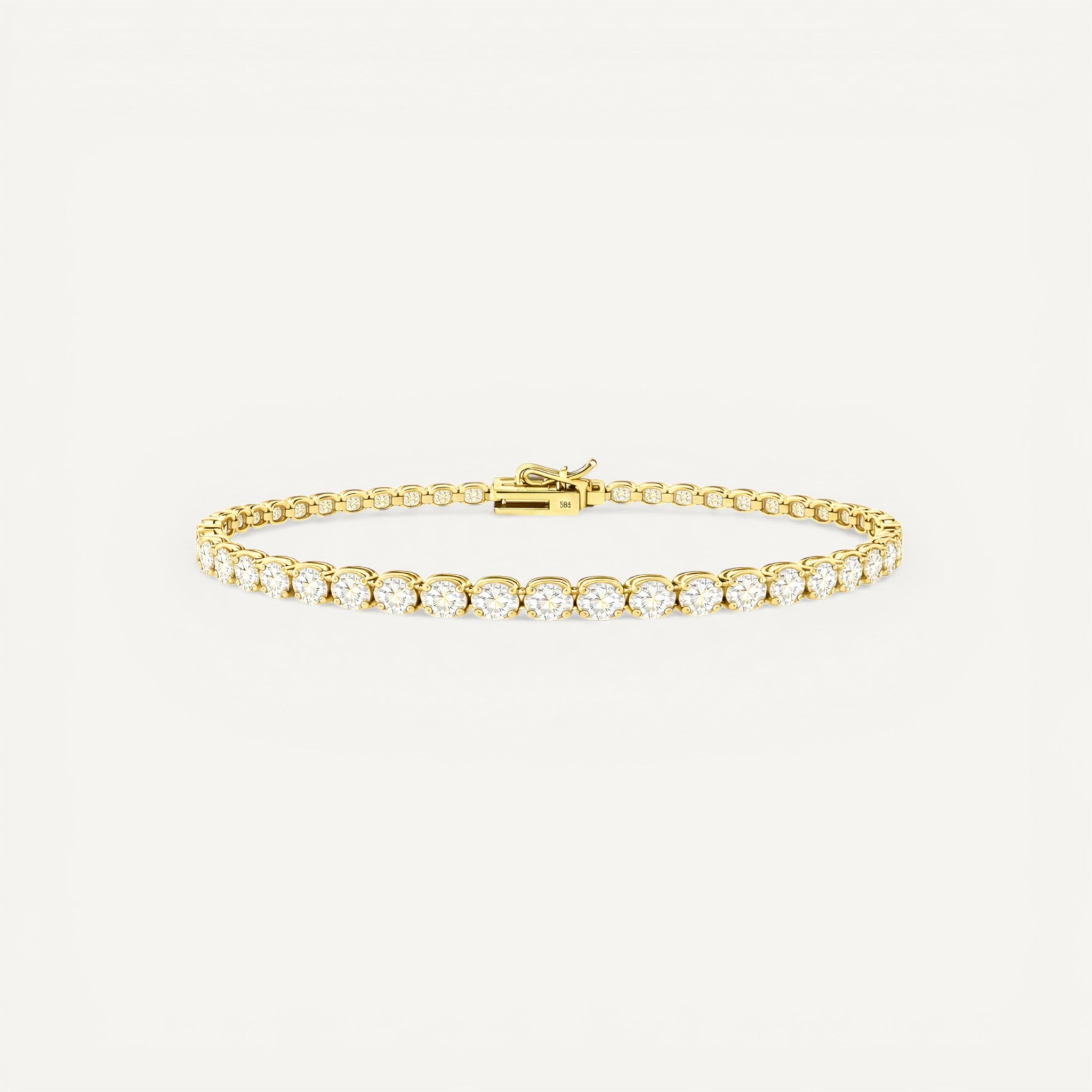
En lire plus
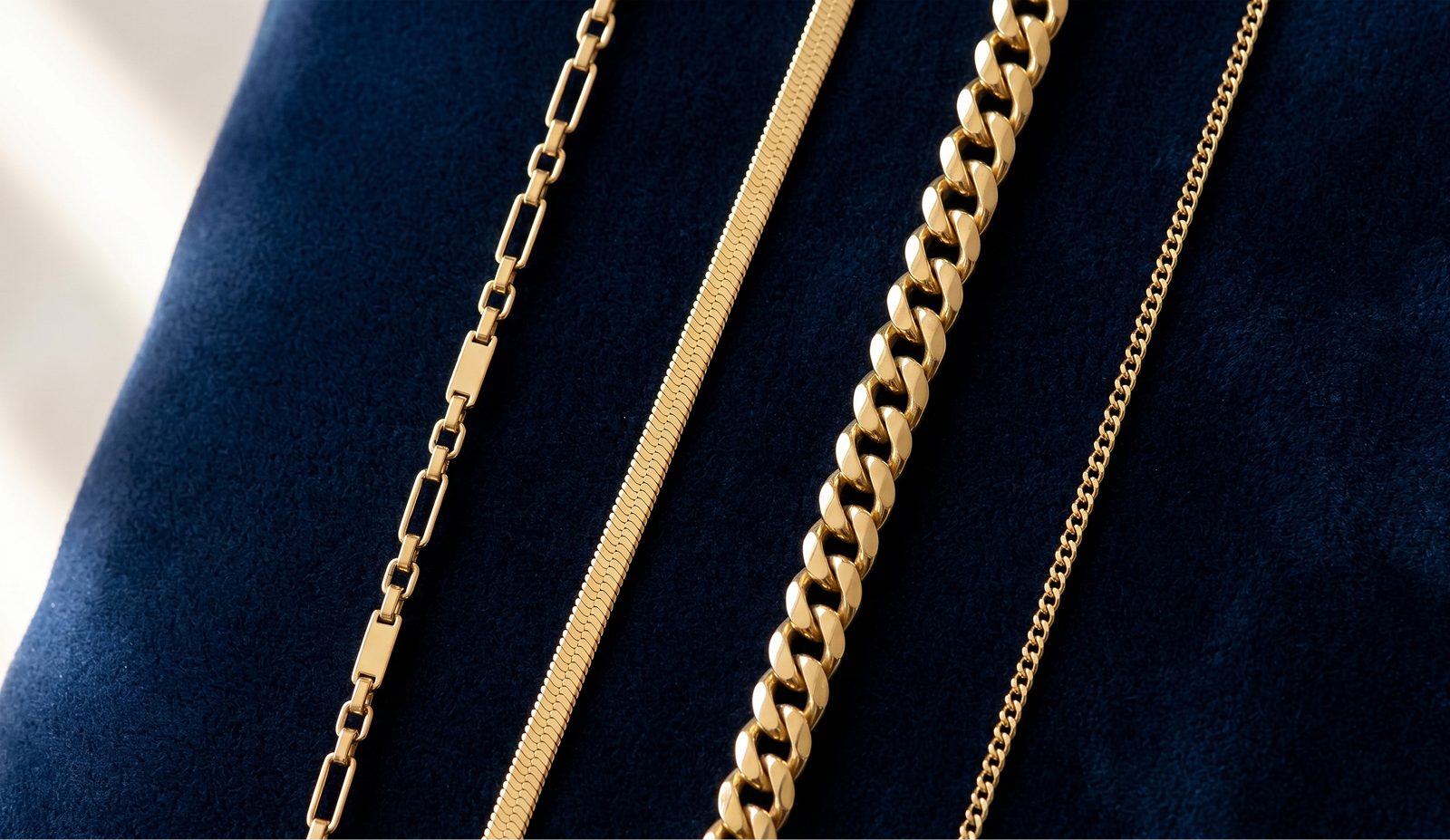
Un guide en langage clair des styles de chaînes en or massif — cubaine, corde, boîte, figaro, blé, chevrons — et comment choisir la largeur et la longueur.
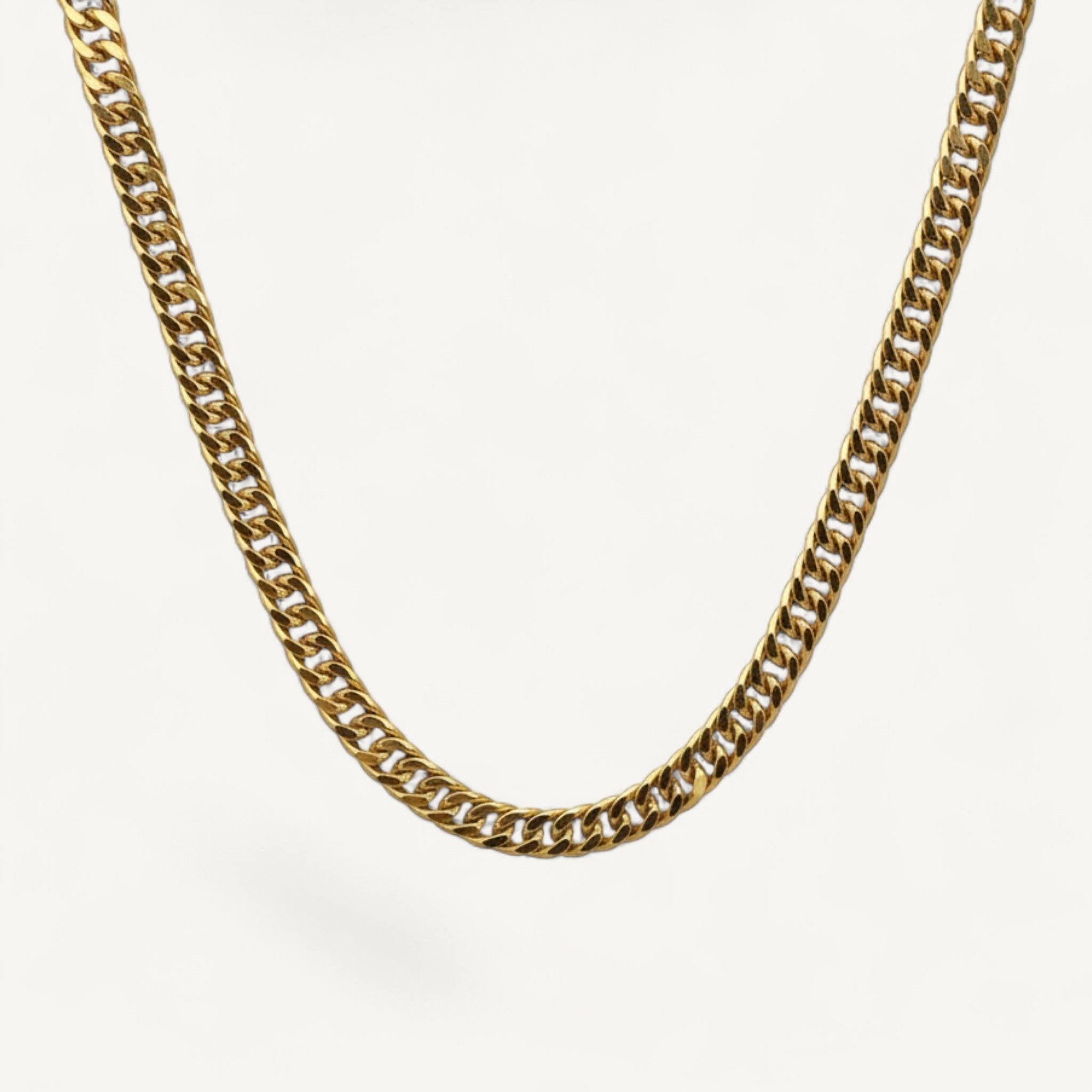
La chaîne cubaine est celle que la plupart des gens imaginent quand ils pensent « chaîne en or » : une rangée de maillons ovales épais et entrelacés qui reposent à plat et captent la lumière. Elle ...