
How to Layer Gold Necklaces: A Practical Guide
Knowing how to layer necklaces sounds like it should be simple. Pick two chains, put them on. But if you've ever ended up with a tangled knot at the clasp, or two identical-looking chains sitting at the same length, you already know there's a bit of technique involved. This guide covers the length ladder, the width rules, how to pick chains that actually work together, and the one move that prevents most tangling. By the end, you'll have a clear idea of which two or three pieces from our chains collection to start with.
The length ladder: why spacing is everything
The single most important rule in layering is this: each chain needs its own length zone. When two chains sit at the same length, they compete. They tangle. The look reads as one messy bundle rather than two intentional pieces.
The standard ladder that works for most necklines:
- 16 inches (40 cm): sits close to the collarbone. The top layer — often the most delicate chain or a pendant.
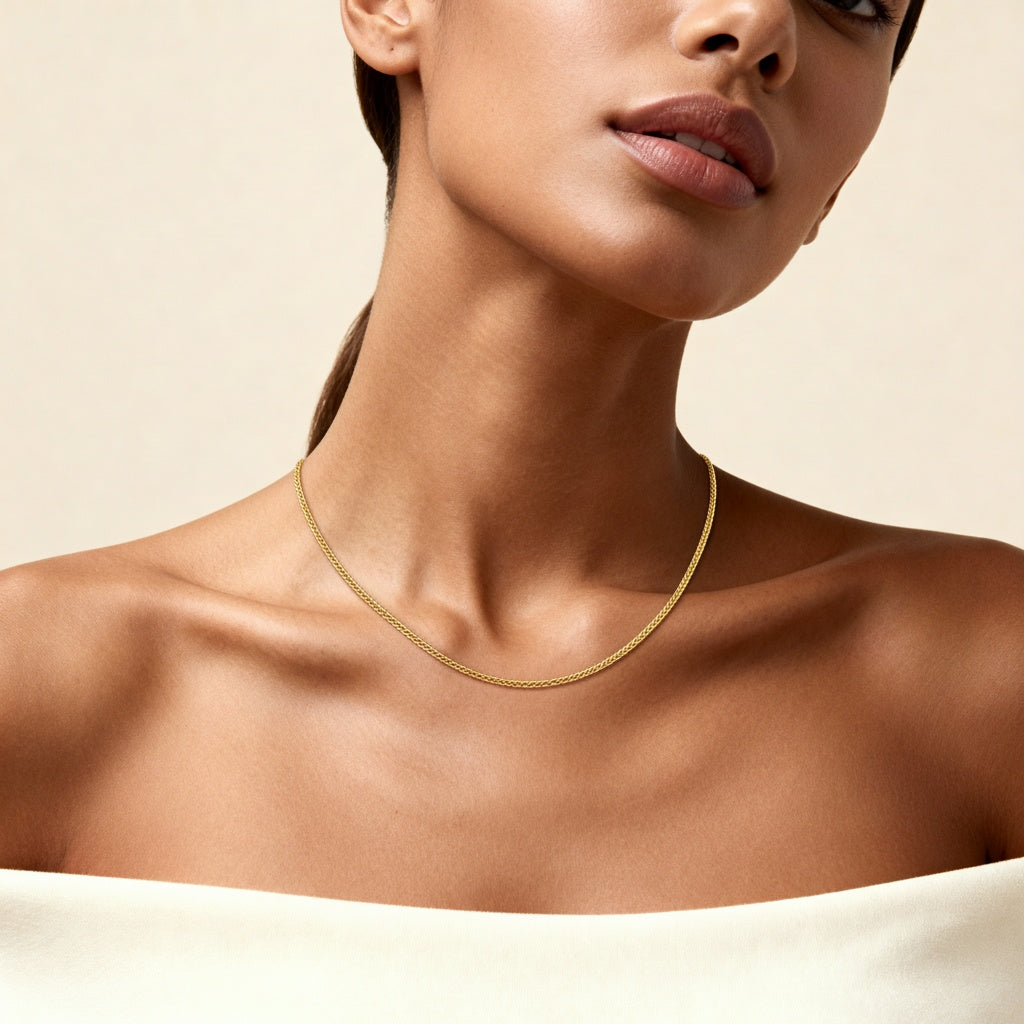
- 18 inches (46 cm): rests just below the collarbone. The natural starting point for most chain sets.
- 20 inches (51 cm): falls at the base of the collarbone or top of the chest. A good second layer with visible separation.
- 22 inches (56 cm): sits mid-chest. Reads clearly distinct from an 18-inch piece.
- 24 inches (61 cm): lands lower on the chest. Ideal as an anchor or a longer statement piece in a three-chain set.
For a clean two-chain set, the safest spacing is 4 inches between layers — for example, 18 and 22 inches. For a three-chain set, 18, 20, and 24 inches works well: close enough to read as a set, spread enough that each chain has room to fall on its own.
Our chain size guide shows how each length actually sits on different body proportions — use it to calibrate before you buy. The measurements are the same across all our chain styles.
Width and weight: how to mix styles without clashing
Length spacing keeps chains physically separated. Width and weight contrast is what makes a layered set look deliberate rather than accidental.
The most reliable approach: one delicate chain, one medium chain, and optionally one with real visual weight. When all three pieces are the same width, the result is flat. When they vary, each layer pulls attention on its own.
The delicate layer (1–1.5mm wide)
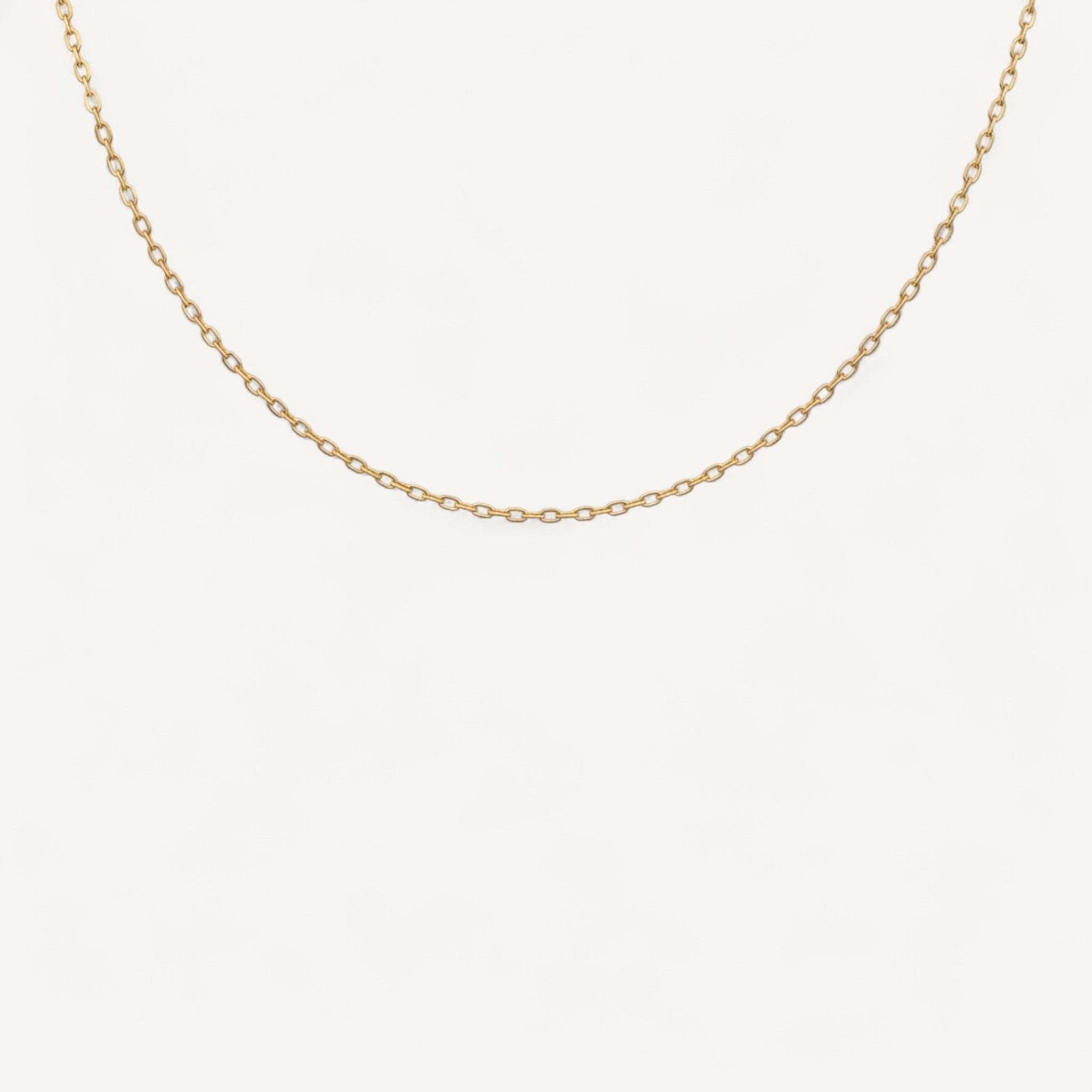
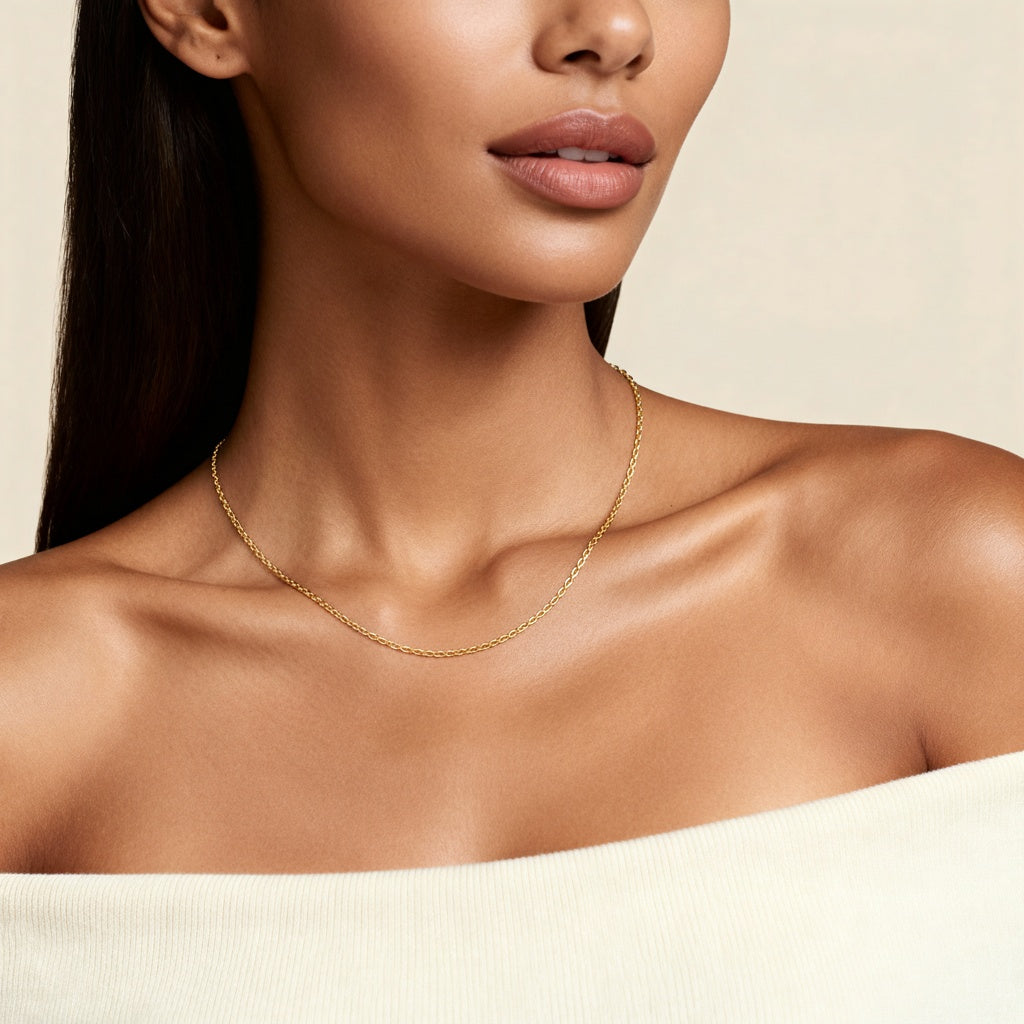
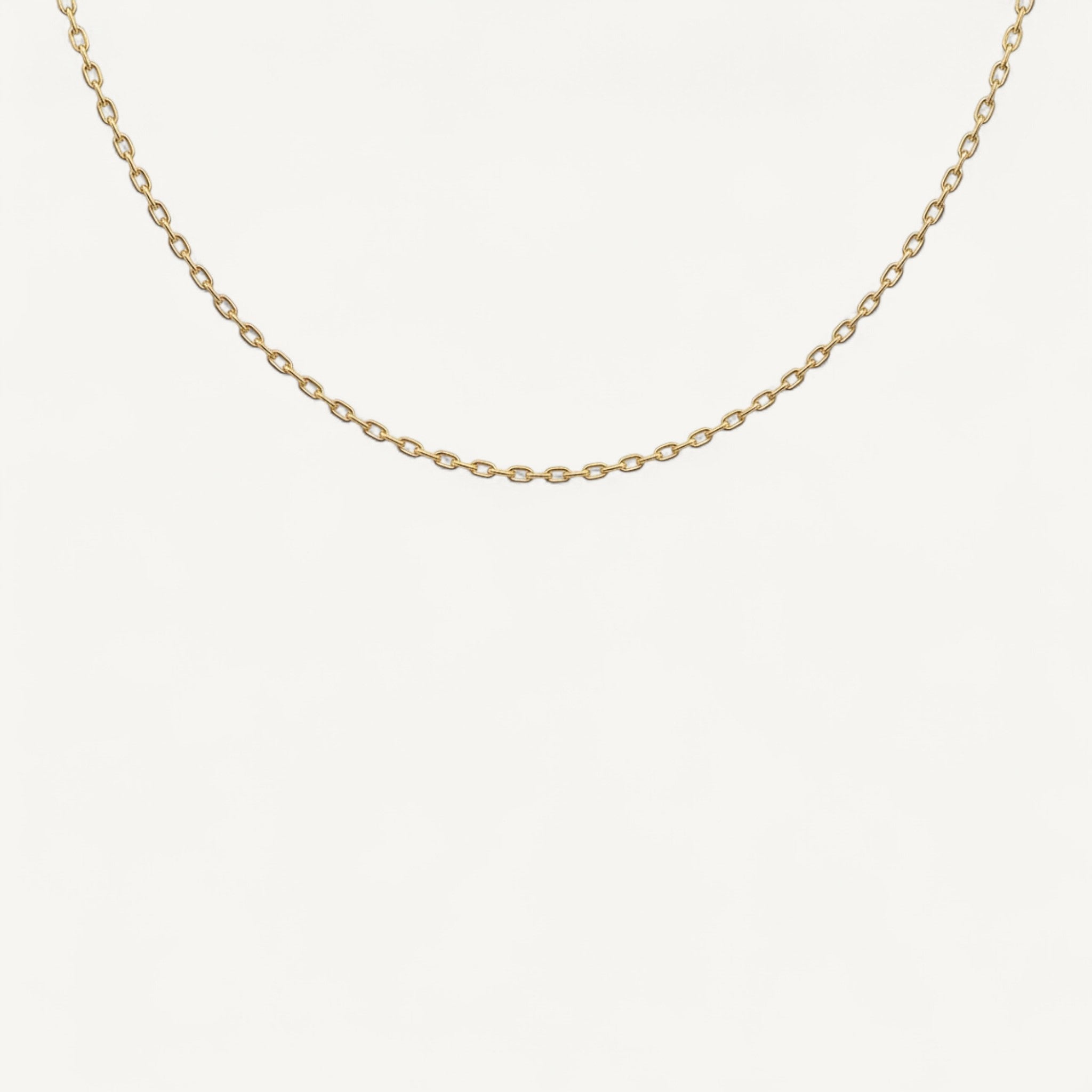
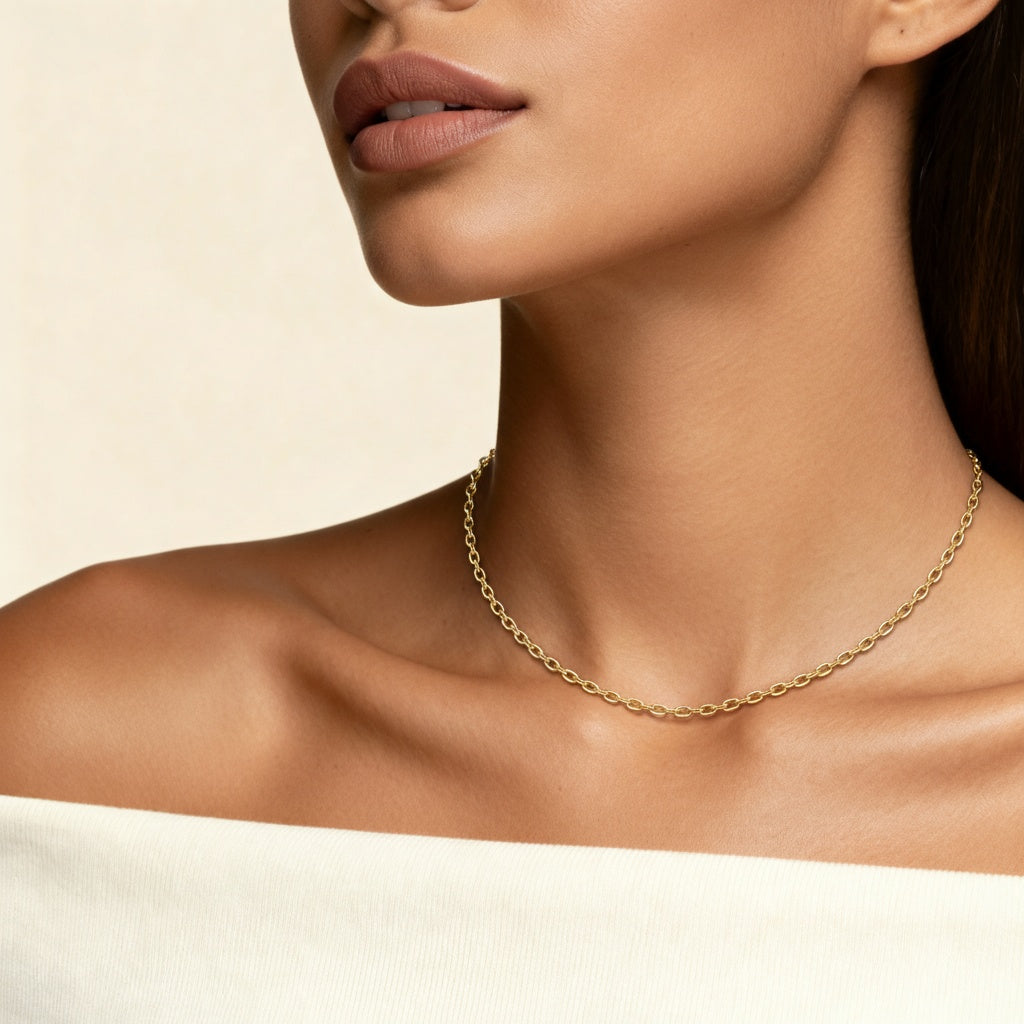
A fine oval cable chain or a similarly lightweight style works here. At 1mm to 1.5mm wide, the chain reads as a clean line rather than a statement. It sits closest to the neck (16–18 inches) and gives the layered set a light foundation. Our Vero Petite Oval Cable Chain (10K yellow gold, 18–24 inches, from $239) is the chain we use most often as a first layer — the links are oval-shaped, which means the chain drapes flat and doesn't bunch.
The mid-weight layer (2–3mm wide)
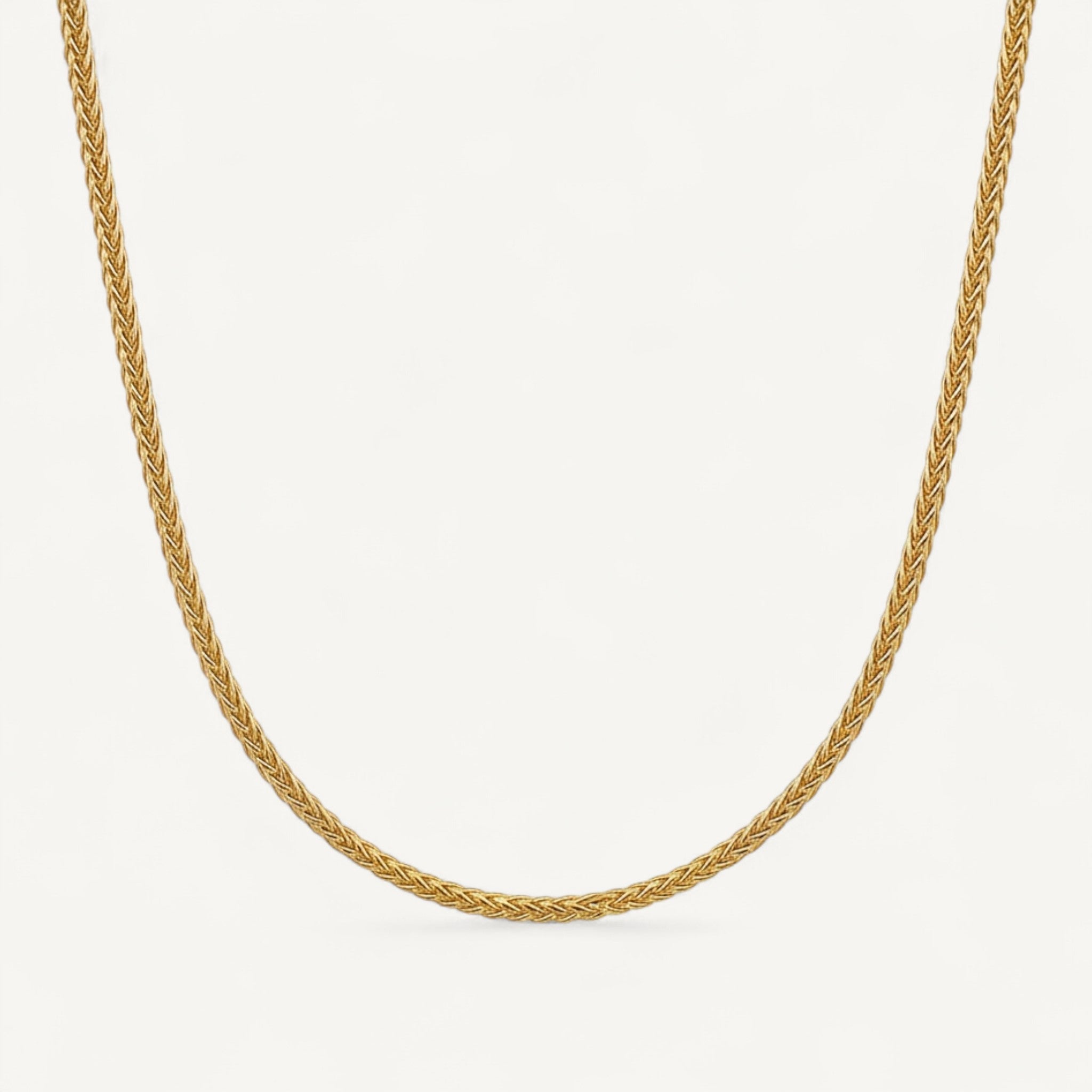
This is usually the second chain, sitting 2–4 inches below the first. A slightly wider cable, a wheat chain, or a paperclip style all work here. The width difference is what creates the visible contrast. A wheat chain like our Arbor Graceful Wheat Chain (10K yellow gold, 18–24 inches, from $699) adds texture — the woven link pattern catches light differently than a plain cable. That texture contrast is more interesting than just switching widths.
A paperclip chain is another option at this tier. The elongated rectangular links are flat and wide enough to read clearly as a second layer, but not so heavy that they visually overpower a delicate first layer. Our Tempo Essential Paperclip Chain (10K yellow gold, 18–24 inches, from $749) sits in that mid-weight range.
The anchor layer (4mm+ wide)
Not every layered set needs a heavy anchor. But if you want a set that reads as intentional rather than minimal, a Cuban link chain at the longest length is the move. Cuban links have a flat, tightly interlocked structure — they hold their shape even when worn with lighter chains above them. At 4mm wide and 22–24 inches, a Cuban anchor makes the top layers look more delicate by contrast.
Our Ethos Subtle Cuban Chain (10K yellow gold, 18–24 inches, from $499) is a 4mm Cuban that works as either a standalone piece or as an anchor layer. If you want more width and a bolder statement, the Ethos Graceful Cuban (from $549) runs slightly wider and is still comfortable to layer.
For a deeper look at how Cuban links compare to curb and cable styles, see our Cuban link buyer's guide.
Mixing chain styles: what actually works
There are no strict rules here, but there are patterns that tend to work and patterns that tend to conflict.
Pairs that work well together
- Oval cable + Cuban: The contrast in texture and width is significant enough that each chain reads clearly on its own. This is the most common two-chain layering combination.
- Cable + paperclip + Cuban: A classic three-layer set. Each style has a distinct link shape. The cable is fine, the paperclip is flat and elongated, the Cuban is tight and structured.
- Wheat + cable: Texture contrast without a significant width difference. Good for a subtle, tonal look where you want variation but not drama.
Combinations that are harder to pull off
- Two Cuban links of the same width: They'll look like one thick chain rather than two layered pieces. If you want to layer two Cubans, they need to be meaningfully different in width (for example, 4mm and 7mm+).
- Herringbone + anything: Herringbone chains are flat and ribbon-like by design. They don't sit comfortably alongside chains with vertical link structure — the herringbone tends to flip and get caught. Better worn on its own.
- More than one very fine chain at the same length: Even with different styles, two delicate chains at the same length will tangle and read as one.
For an overview of all the chain styles available — curb, box, rope, figaro, and more — the types of gold chains guide covers the full spectrum. Use it as a reference before you decide which styles to mix.
Neckline and layering: adjusting the set
The neckline of what you're wearing affects which chain lengths work. Some quick guidelines:
- Crew necks and high necklines: Layering is harder here. A 16-inch chain disappears under a crew neck. Shift your ladder down — start at 20 inches and go longer.
- V-necks: The layered set sits in the V and the neckline frames it. A 16–22 inch spread works well because the V draws attention to that area.
- Off-shoulder and strapless: The layered set becomes the focal point. This is where you can go bolder — a wider Cuban anchor at 24 inches reads clearly with nothing competing above it.
- Scoop necks: A two-chain set at 18 and 22 inches tends to sit nicely in the curve of the scoop without getting hidden.
How to prevent tangling
Two things cause most tangling: chains at the same length, and different-weight chains clipped to the same clasp ring.
The length spacing above handles the first problem. For the second: if you're wearing three chains and all three clasps are in the same spot at the back of your neck, the clasps themselves can catch on each other as you move. A few options:
- Layer-lock connectors: Small rings that clip two clasps together and space them vertically. Inexpensive, widely available. They keep the clasps stacked cleanly.
- Adjustable chains: If a chain has an extender link, you can set each chain to a slightly different clasp position on the neck. Even 1 cm of vertical separation at the clasp reduces tangling noticeably.
- Longer vs shorter lengths: A 4-inch length difference between chains means the chains fall on very different sections of the chest. Less movement overlap equals less tangling.
All our chains come with an extender link built into the clasp, so you can adjust length by 1–2 inches without buying a different size.
Why 10K solid gold layers well
There's a practical reason layering guides tend to specify solid gold rather than gold-filled or plated pieces: durability under friction. When chains rest against each other — especially a fine cable against a wider Cuban — the contact point gets daily wear. With a plated piece, the wear shows at those contact points first, usually within months.
10K gold (41.7% gold by weight) is harder than 14K or 18K because the higher percentage of alloy metals makes the metal more resistant to surface scratching. That hardness matters in a layered set where chains move against each other during the day. 10K layers stay looking the same at two years as they did at two weeks. That's the practical case for solid gold in a layered context — not just as a brand preference, but as a functional material choice.
If you're deciding between 10K and 14K, our 10K vs 14K guide explains the tradeoffs in detail. For chains worn daily — including layered — 10K is typically the right answer.
Building a set: two starting points
Most readers come to layering from one of two starting points:
Starting from scratch
If you don't own any chains yet, buy the delicate cable first. Wear it at 18 inches. Once you know how that length sits on you, the second chain choice becomes obvious — you'll know whether you want something 4 inches lower (at 22 inches) or want to work with a longer set. The Vero Petite Oval Cable at $239 is the right starting piece because it's the most versatile single chain in the catalog — it layers with everything and works equally well on its own.
Adding to a chain you already own
Measure the chain you have (or check the product page for the length). Then pick the next piece to sit 4 inches below it. If your existing chain is a fine cable, a Cuban or paperclip at 4 inches longer gives you clear contrast. If your existing chain is a Cuban, a fine cable 4 inches shorter gives you the same contrast in the other direction.
Shop: chains that layer well
The five chains below were selected for layering range — a mix of lengths, widths, and link styles that complement each other. All are 10K solid yellow gold and in stock.
- Vero Petite Oval Cable Chain — 10K yellow gold, 18–24 in, from $239. The delicate anchor for any layered set.
- Vero Graceful Oval Cable Chain — 10K yellow gold, 18–24 in, from $549. Mid-weight cable; steps up in width from the Petite for visible contrast.
- Arbor Graceful Wheat Chain — 10K yellow gold, 18–24 in, from $699. Woven link texture; the most distinctive second layer in the collection.
- Ethos Subtle Cuban Chain — 10K yellow gold, 18–24 in, from $499. 4mm Cuban; clean anchor at 20–22 inches.
- Tempo Essential Paperclip Chain — 10K yellow gold, 18–24 in, from $749. Elongated flat links; a structured mid-layer or standalone piece.
Browse the full chains collection to see all styles and lengths.