Lab-Grown vs Natural Diamonds: An Honest Guide for Jewellery Buyers
The question of lab grown vs natural diamonds comes up in nearly every diamond jewellery purchase now — and the honest answer is more nuanced than most articles admit. This guide covers what actually differs between the two, what does not, and how to decide which makes sense for your purchase. We sell lab-grown diamond jewellery in solid 14K gold, so we have a stake in giving you an accurate picture rather than an oversimplified one.
The short answer: are lab-grown diamonds real diamonds?
Yes. A lab-grown diamond is a real diamond — not a simulant, not a substitute. It has the same crystal structure (cubic carbon), the same hardness (10 on the Mohs scale), the same optical properties, and the same chemical composition as a mined diamond. The only difference is origin: one formed underground over billions of years, the other in a controlled environment over weeks or months.
The U.S. Federal Trade Commission updated its definition in 2018 to confirm this. In Canada, the Competition Bureau follows harmonised guidelines: a lab-grown diamond must be disclosed as lab-grown, but it is not a different material — it is a diamond. "Lab-grown" is a disclosure of origin, not a downgrade of quality.
What follows is a comparison of the factors that actually matter to a buyer.
How lab-grown diamonds are made
There are two production methods in commercial use today.
CVD (Chemical Vapour Deposition): A diamond seed crystal is placed in a sealed chamber. A carbon-rich gas — usually methane — is pumped in and activated with microwave energy. Carbon atoms rain down on the seed and crystallise layer by layer into a rough diamond. The process takes two to four weeks for a gem-quality stone. The result is chemically identical to a mined diamond; no one can distinguish the two without specialised lab equipment.
HPHT (High Pressure High Temperature): This method replicates the geological conditions that form natural diamonds — extreme pressure (around 1.5 million PSI) and high heat (around 1,500°C) applied to a carbon source and a diamond seed. HPHT has been used since the 1950s; it is the older of the two methods and produces stones that are equally real.
Both methods produce rough diamonds that are then cut and polished by the same craftspeople, on the same equipment, as mined diamonds. The 4Cs — cut, colour, clarity, carat — apply equally and are graded by the same institutions (GIA, IGI, GCAL).
Comparing the four factors that matter
Price
This is where lab-grown and natural diverge most sharply. Lab-grown diamonds typically cost 50–80% less than mined diamonds of comparable cut, colour, and clarity. A 1-carat D/VS1 lab-grown diamond might trade at $800–$1,200 CAD wholesale; the same specification in a mined diamond would run $6,000–$10,000 CAD or more.
What this means practically: the same budget that buys a small mined diamond can buy a noticeably larger or higher-quality lab-grown stone. For everyday jewellery — stud earrings worn daily, a tennis bracelet on the wrist — the price difference is meaningful without any sacrifice in appearance or durability.
Appearance
Visually identical to the naked eye, and to most gemological instruments without specialised screening. Both can be colourless (D–F range), near-colourless (G–J), or lower. Both exhibit the same fire, brilliance, and scintillation when well-cut. The grade on your certificate determines what you see — not the origin.
One nuance: very early CVD stones (pre-2015) sometimes showed a slight greyish hue under certain lighting conditions. Modern CVD production has largely resolved this. Any reputable retailer will be transparent about the grading certificate, which tells you exactly what you are buying.
Durability
Identical. Hardness is a function of crystal structure, and both mined and lab-grown diamonds have the same cubic carbon structure. Both score 10 on the Mohs hardness scale — the hardest naturally occurring material. Both are equally resistant to scratching, chipping (with proper setting), and daily wear. There is no durability argument for choosing one over the other.
Resale value
This is the clearest area of difference, and we will be straightforward about it. Natural diamonds — particularly larger, higher-colour stones — have historically retained resale value better than lab-grown diamonds. As lab-grown production has scaled and prices have dropped, the secondary market for lab-grown stones has softened further.
The important context: most jewellery does not get resold. The resale market for fine jewellery at the consumer level is generally thin regardless of diamond origin. If you are buying a pair of stud earrings or a tennis bracelet to wear and keep, resale is not the primary variable. If you are buying a diamond specifically as a financial holding, neither a mined nor a lab-grown stone is an appropriate vehicle — and we will not frame jewellery that way.
Ethics and provenance
The ethical picture is more complicated than either side usually presents.
Lab-grown diamonds have a lower land-use footprint and avoid the sourcing concerns associated with conflict diamonds. The Kimberley Process addresses the most serious concerns around conflict financing, but critics note it has gaps. A buyer who wants full supply-chain confidence will generally find that easier with a lab-grown stone from a certified producer.
The other side: lab-grown diamond production is energy-intensive. CVD and HPHT both require significant electricity. Producers powered by renewable energy have a much lower carbon footprint; those running on coal-based grids do not. The environmental claim depends entirely on the energy source, which varies by facility and country.
Natural diamond mining, at its best, supports local economies and communities in producing countries. Some miners operate with strong labour standards and environmental rehabilitation programs. At its worst, it does not. The range is wide.
The honest answer: neither is automatically the ethical choice. If provenance matters to you, ask your retailer for specifics — a certificate of origin for the mined stone, or an energy-source disclosure for the lab-grown one.
What the FTC and Competition Bureau say
In the United States, the FTC requires that lab-grown diamonds be disclosed as such and prohibits using the unqualified word "diamond" alone for a lab-grown stone in advertising (the correct usage is "lab-grown diamond," "lab-created diamond," or "synthetic diamond"). The intent is transparency, not hierarchy.
In Canada, the Competition Bureau follows harmonised guidelines consistent with the FTC position. A lab-grown diamond sold in Canada must be clearly identified as lab-grown at the point of sale. All products on our site comply with this requirement — every diamond piece specifies its origin.
Which is right for you? Two questions
Rather than a one-size answer, here is a practical decision tree.
Question 1: Does origin matter to you personally? Some buyers feel a strong connection to the idea of a stone that formed naturally in the earth over geological time. That is a valid and personal preference — no rational argument overrides it. If this resonates, a natural diamond is the right choice, knowing you will pay more for the same visual result. If you are neutral on origin, move to question 2.
Question 2: What do you want the budget to do? With lab-grown, the same budget buys a larger stone, a better colour or clarity grade, or a more substantial setting. If you would rather put the difference into the gold quality — a heavier setting, a longer tennis necklace, or a second pair of studs — lab-grown gives you that flexibility.
There is no wrong answer. Both are real diamonds, set in real solid gold, worn for real.
The setting matters more than most buyers realise
Whether you choose lab-grown or natural, the gold setting determines how the piece performs over years of wear. A diamond in a thin or low-karat setting will loosen prongs, wear at the claws, and eventually put the stone at risk. A diamond in a well-made 14K solid gold setting will hold its stone securely for decades of daily wear.
We set our diamond pieces in 14K solid gold — not plated, not gold-filled. 14K (58.5% pure gold) is the right specification for prong-set diamond jewellery: hard enough to hold the stone, soft enough for a jeweller to adjust the prongs without cracking, and solid through to the core so it cannot be worn to a base metal. Our guide to 10K vs 14K gold covers the karat decision in full if you want the detail.
The 4Cs of the diamond matter. The karat and construction of the setting matter equally.
Lab-grown diamonds in tennis jewellery and stud earrings
The two categories where lab-grown diamonds make the most practical sense for everyday jewellery are tennis bracelets and stud earrings — because both use multiple small stones, and the total carat weight (and therefore total cost difference) is significant.
A tennis bracelet with 4–7 carats of total diamond weight at natural prices represents a very significant purchase. The same bracelet in lab-grown diamonds is considerably more accessible, with no difference in daily appearance or wearability. The same logic applies to stud earrings: a 1-carat total weight pair in lab-grown costs a fraction of the natural equivalent and looks identical on the ear.
For buying guidance on the tennis pieces specifically — length options, prong vs bezel setting, how to choose total carat weight — see our tennis bracelet buying guide and our guide to 14K gold tennis necklaces. Those articles cover the selection decisions in full; this one covers only the diamond origin question.
Shop diamond jewellery at Jewelry to Remember
Every diamond piece we carry is set in solid 14K gold, and every stone is lab-grown and disclosed as such. Here are our current diamond pieces, all ACTIVE and in stock:
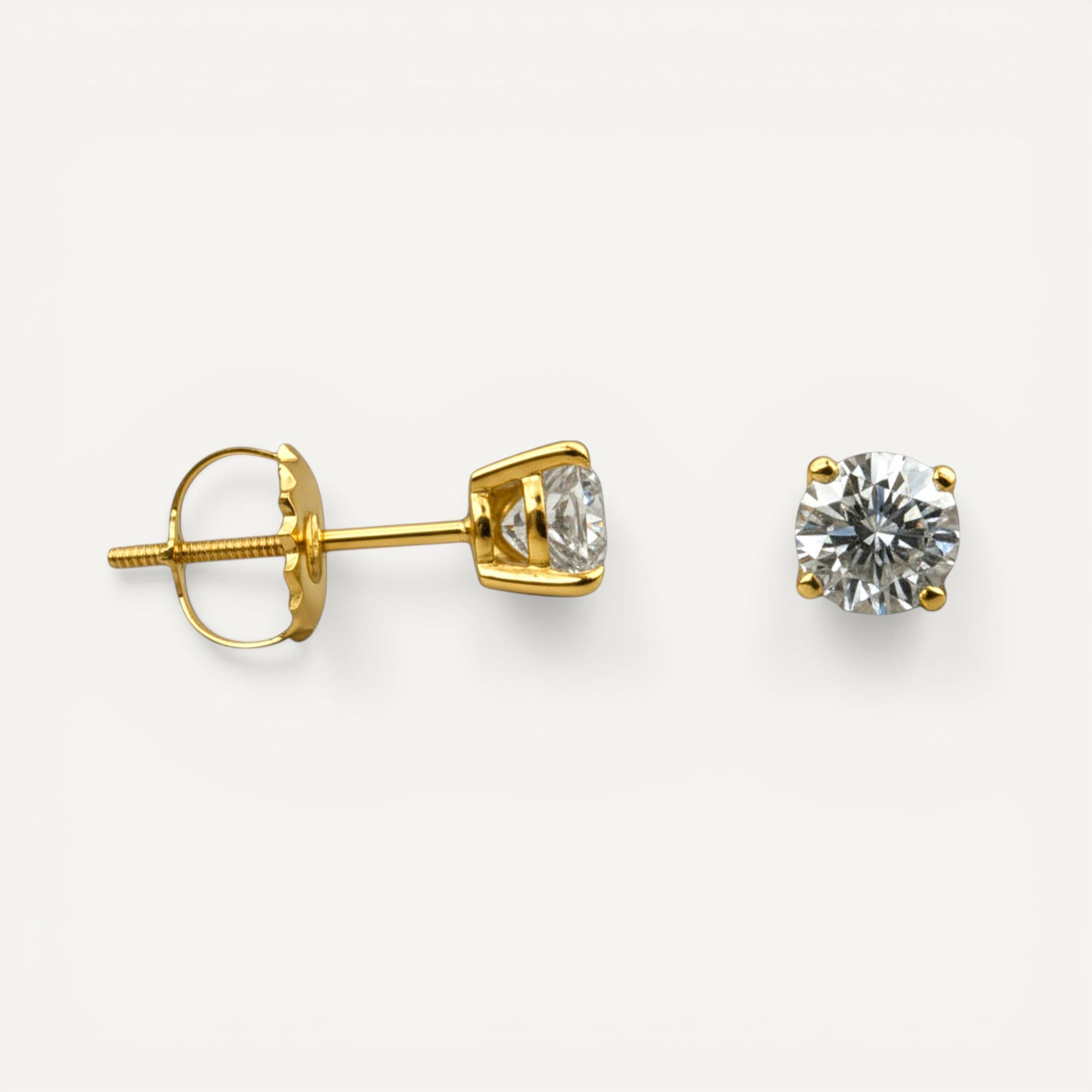
- 14K Yellow Gold Solitaire Linea Studs – Petite (1/4–1/2 ct tw) — $239 CAD, 40 in stock — the most accessible entry into solid-gold diamond earrings.
- 14K Yellow Gold Solitaire Linea Studs – Classic (1/2–1 ct tw) — $319 CAD, 31 in stock — a noticeable step up in presence, still an everyday weight.
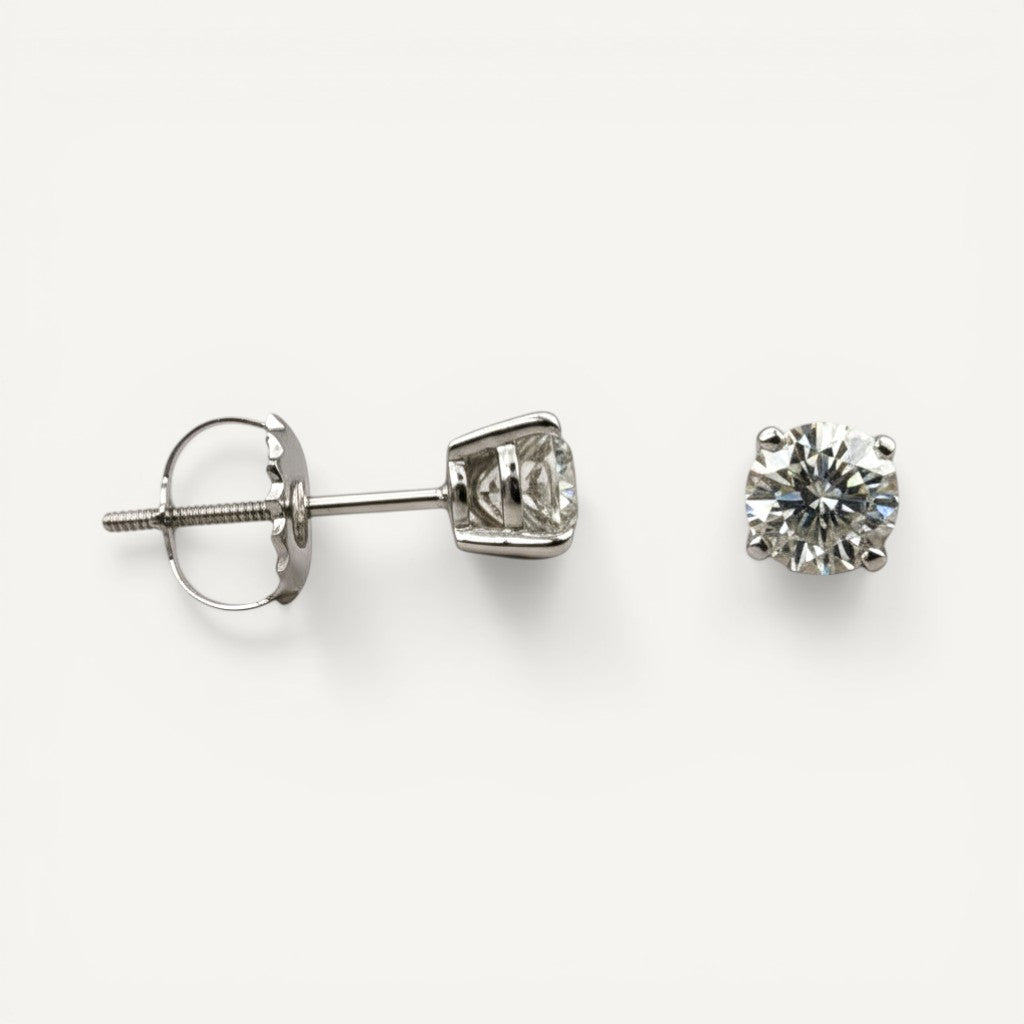
- 14K White Gold Solitaire Linea Studs – Petite (1/4–1/2 ct tw) — $239 CAD, 32 in stock — white gold reads slightly cooler and more neutral than yellow; the stone reads the same.
- 14K White Gold Solitaire Linea Studs – Bold (1.5–2 ct tw) — $499 CAD, 32 in stock — this is the statement stud: visible from across a room, still wearable daily in a secure 14K setting.
- 14K White Gold Heritage Prong Tennis Bracelet – Petite (2.5–4.5 ct tw) — $1,899 CAD, 12 in stock — the entry tennis bracelet; classic prong setting, 14K white gold throughout.
- 14K White Gold Heritage Prong Tennis Bracelet – Classic (5–7 ct tw) — $2,499 CAD, 10 in stock — more presence on the wrist; the same solid 14K construction.
Browse the full stud earrings collection and tennis bracelets collection.