
Solid Gold vs Gold-Filled vs Vermeil: The Difference That Matters
If you have ever compared jewellery prices and wondered why two pieces that look nearly identical can be priced $50 apart or $500 apart, the answer almost always comes down to one thing: the metal. The terms solid gold vs gold filled — along with vermeil and gold-plated — describe four genuinely different materials, not just four points on a luxury ladder. Understanding what each one actually is will help you shop with confidence, whether you are buying for yourself or choosing a gift that holds up for years.
This guide explains each category plainly, teaches you how to read the hallmark stamps on a piece, and covers where plating starts to fail. If you want to know specifically whether 10K is good quality or how 10K compares to 14K, those questions are answered in detail in two companion articles we link to below — we will not repeat that ground here.
The Short Answer: What Each Term Actually Means
- Solid gold — the metal is gold (alloyed with other metals for strength) all the way through, at a legally defined purity. No coating. No core.
- Gold-filled — a solid base metal (usually brass) with a thick layer of gold bonded to the outside under heat and pressure. The gold content is defined by law as at least 5% of the total weight.
- Gold vermeil — sterling silver base with a gold coating applied by electroplating. The coating must meet a minimum thickness standard (in Canada and the US: at least 2.5 microns).
- Gold-plated — any metal base with a thin layer of gold applied by electroplating. No minimum thickness is required by law, which means quality varies widely.
Each of these is a real product, honestly described. The question is not which is morally superior but which one fits what you are actually looking for.
Solid Gold: What the Karat Stamps Mean
Solid gold pieces are stamped with a number that tells you the proportion of pure gold in the alloy. In Canada, the two most common are:
- 10K (stamped 10K or 417) — 41.7% pure gold. The remaining 58.3% is typically silver, copper, and zinc, which is what gives 10K its durability. Harder than higher-karat golds, which is why it holds up well in rings and chains that take daily friction.
- 14K (stamped 14K or 585) — 58.5% pure gold. A warmer, slightly softer alloy. The preferred choice for fine jewellery settings, including prong-set stones, where a small amount of workability in the metal matters.
The 417 and 585 stamps are the alternative numeric codes you will sometimes see, especially on older or European pieces. They represent the same alloys as 10K and 14K — 417 parts per thousand pure gold, and 585 parts per thousand pure gold, respectively. If you see a piece stamped 417, that is 10K solid gold.
A key point: the word "solid" here does not mean pure. It means the metal composition is consistent throughout the piece — there is no hidden base layer underneath a gold surface. A 10K solid gold chain contains 41.7% gold from the surface to the core. That is what makes it solid.
To go deeper on karat quality and how 10K holds up over time, read our article Is 10K Gold Good? An Honest Answer. For a direct comparison between 10K and 14K, see 10K vs 14K Solid Gold: What's the Difference and Which Should You Buy.
Gold-Filled: How It Differs
Gold-filled jewellery is made by bonding a layer of solid gold onto a base metal core — usually brass — using heat and pressure. The bond is mechanical, not electroplated. That is an important distinction: the gold layer in gold-filled pieces is genuinely thick relative to electroplated alternatives, and it is fused rather than deposited.
In the US, the Federal Trade Commission requires that gold-filled pieces contain at least 5% gold by total weight. Canadian rules are harmonised to the same standard. You will often see it stamped as GF, or written as "14K GF" for a piece with a 14-karat gold layer.
Gold-filled holds up reasonably well — better than thin plating — but it is not permanent. Over years of wear, the gold layer thins at the points of highest friction: clasps, the inside of bracelets, the back of rings. The base metal underneath is not gold, and once the layer wears through, the appearance of the piece changes. How quickly that happens depends on the thickness of the gold layer, your skin chemistry, and how often the piece comes into contact with water, lotions, or sweat.
Gold-filled is not a bad product. For a piece worn occasionally, it can last years. But it is a different material with a different lifespan than solid gold, and the two should not be priced or presented as equivalent.
Gold Vermeil: The Middle Ground
Vermeil (pronounced "ver-may") uses sterling silver as its base instead of brass. Sterling silver is itself a precious metal, which is why vermeil sits in a different category from standard gold-plated pieces. The gold coating on a vermeil piece must meet a legal minimum thickness — 2.5 microns in both Canada and the US — and the base must be sterling silver.
Because the base is sterling, vermeil is heavier and slightly warmer to handle than base-metal plated pieces. It is also more expensive to produce than standard gold plate. Some people find it a reasonable middle choice for items they wear less frequently.
The limitation is the same as gold-filled: the surface is a coating. Vermeil will fade or wear through over time, and the rate depends on the same factors — contact points, skin chemistry, product exposure. The clasp of a vermeil necklace typically shows wear first because that is where the metal flexes and rubs with every use. The back of earrings and the inner surface of bangles are the other high-wear zones to watch.
Gold Plated: The Lowest Tier
Standard gold-plated jewellery is any piece with a gold layer applied by electroplating onto any base metal — brass, copper, steel, sometimes zinc alloy. There is no legal minimum thickness for the gold layer in most markets, which is why the category varies enormously in quality.
Flash-plated pieces (sometimes called "gold tone" or "gold coloured") can have a layer less than 0.5 microns thick. A 2-micron plate is considered better quality, but it is still a fraction of what gold-filled pieces carry. On a frequently worn piece, thin plating may show wear within months.
Gold-plated jewellery is not fraudulent. It is simply a different product made for a different budget and use case. The issue arises when it is not clearly labelled, or when it is priced as if it were something more durable.
How to Tell Which You Have: The Hallmark Guide
Most pieces sold in Canada and the US will carry a stamp. Here is what to look for, usually on the clasp, the inside of a band, or the back of a pendant:
| Stamp | What It Means |
|---|---|
| 10K or 417 | Solid 10-karat gold (41.7% gold throughout) |
| 14K or 585 | Solid 14-karat gold (58.5% gold throughout) |
| 18K or 750 | Solid 18-karat gold (75% gold throughout) |
| GF (e.g. 14K GF) | Gold-filled: gold layer bonded to base metal, min. 5% by weight |
| 925 | Sterling silver — if gold-coloured, it may be vermeil |
| GP or HGP | Gold-plated or heavy gold-plated (electroplated layer) |
| No stamp | Unknown — could be plated or a very thin flash coating |
The stamp is not decorative. In Canada, the Precious Metals Marking Act governs what a jeweller can stamp on a piece. If a piece carries a 10K or 14K stamp, it has been represented as solid gold of that purity. This is why the stamp — not the colour, not the look, not the price — is the proof that counts when you are making a purchase decision.
A good habit when buying: ask to see the stamp, or check the listing photos for a close-up. Any reputable seller will show it.
Where Plating Fails First
If you own or are considering gold-filled or vermeil pieces, this is useful to know. Plating does not fade uniformly across a piece. It fails at points of mechanical stress first:
- The clasp — opens and closes hundreds of times; the moving parts are under constant friction.
- Chain links at the nape of the neck — this is where the chain rubs against skin all day.
- The inside of cuffs and bangles — metal against skin creates gradual abrasion.
- Earring backs and posts — the post goes through the piercing repeatedly; the back twists.
- Any engraved or textured surface — high points on a texture wear faster than flat surfaces.
If you notice a colour change at the clasp of a necklace or bracelet before anywhere else, that is not defective manufacturing — it is the physics of a coated metal. A solid gold piece does not have this failure mode because the colour is the material, not a surface layer.
Why Solid 10K Gold Is More Affordable Than Most People Think
There is a widespread assumption that solid gold is out of reach unless you are buying high-end fine jewellery. That assumption is outdated, and it largely reflects how fine jewellery was distributed historically — through retail environments with high overhead, not direct to the buyer.
Today, a solid 10K gold chain necklace from a brand that sells direct can start at $239 CAD. That is less than some gold-filled pieces from boutique lifestyle brands, and significantly less than vermeil pieces from certain fashion labels. The material difference is substantial: the 10K piece will look the same in five years; the plated piece may not.
The reason 10K is the most accessible solid gold option is arithmetic: at 41.7% gold content, a 10K piece uses less pure gold by weight than a 14K piece. Less gold content means a lower material cost, which means a lower price — while still being solid gold through and through.
For buyers choosing between a gold-filled bracelet at $90 and a solid 10K bracelet at $220, the solid option is not necessarily the more expensive choice over time. If the gold-filled piece needs to be replaced in three years, the economics shift. We are not suggesting you run a cost-per-wear calculation on a piece of jewellery, but it is worth knowing the numbers are closer than the price tags suggest.
For proof of what this looks like in practice, see our solid gold guarantee — the promise we make about the material in every piece we sell.
Shop Solid Gold Jewellery
Every piece at Jewelry to Remember is solid karat gold — 10K or 14K — and stamped accordingly. Four of the most-stocked pieces, each a straightforward entry point to a different category:
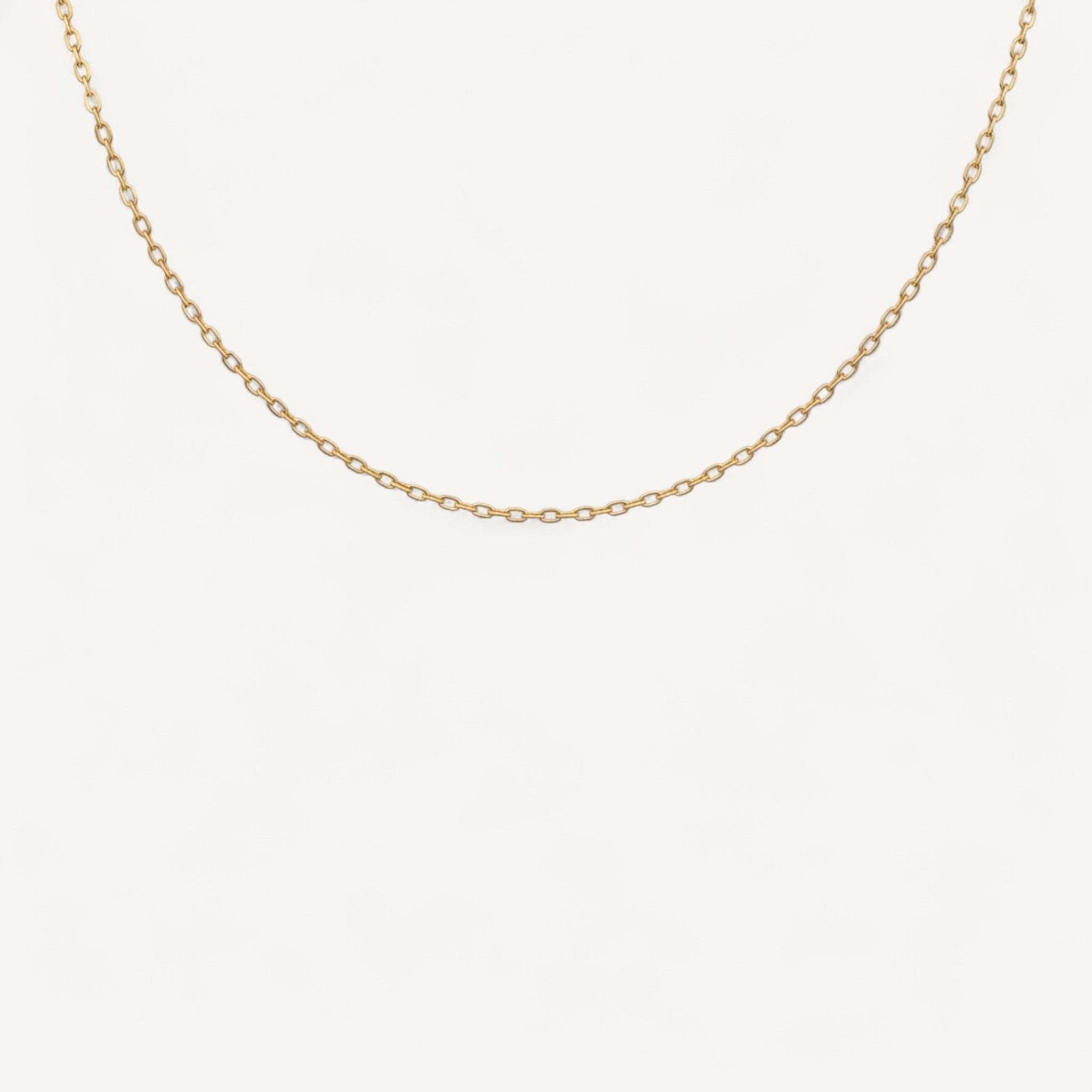
10K Yellow Gold Vero Petite Oval Cable Chain Necklace
$239 CAD — 10K yellow gold, oval cable links, sizes 18”–24”. The most-stocked chain in our catalogue and a clear first solid gold piece.
10K Yellow Gold Lustre Loop Hoop Earrings
$219 CAD — 10K yellow gold hoops. Polished finish, daily wear-ready.
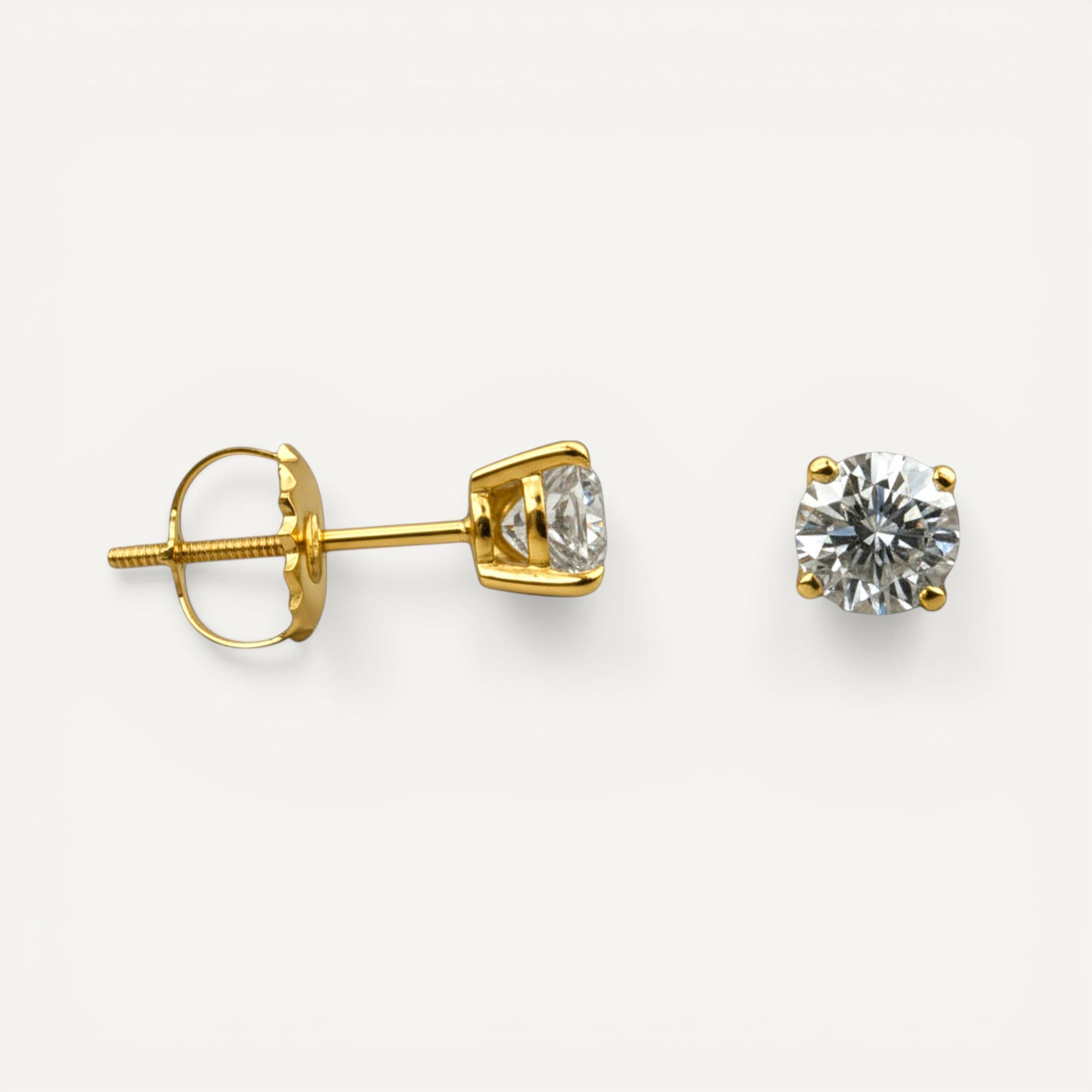
14K Yellow Gold Solitaire Linea Studs — Petite
$239 CAD — 14K yellow gold, lab-grown diamond, prong setting. The entry stud with 10 units in stock.
Men's 10K Yellow Gold Ethos Subtle Cuban Chain Necklace
$549 CAD — 10K yellow gold Cuban-link chain for men, sizes 20”–24”.