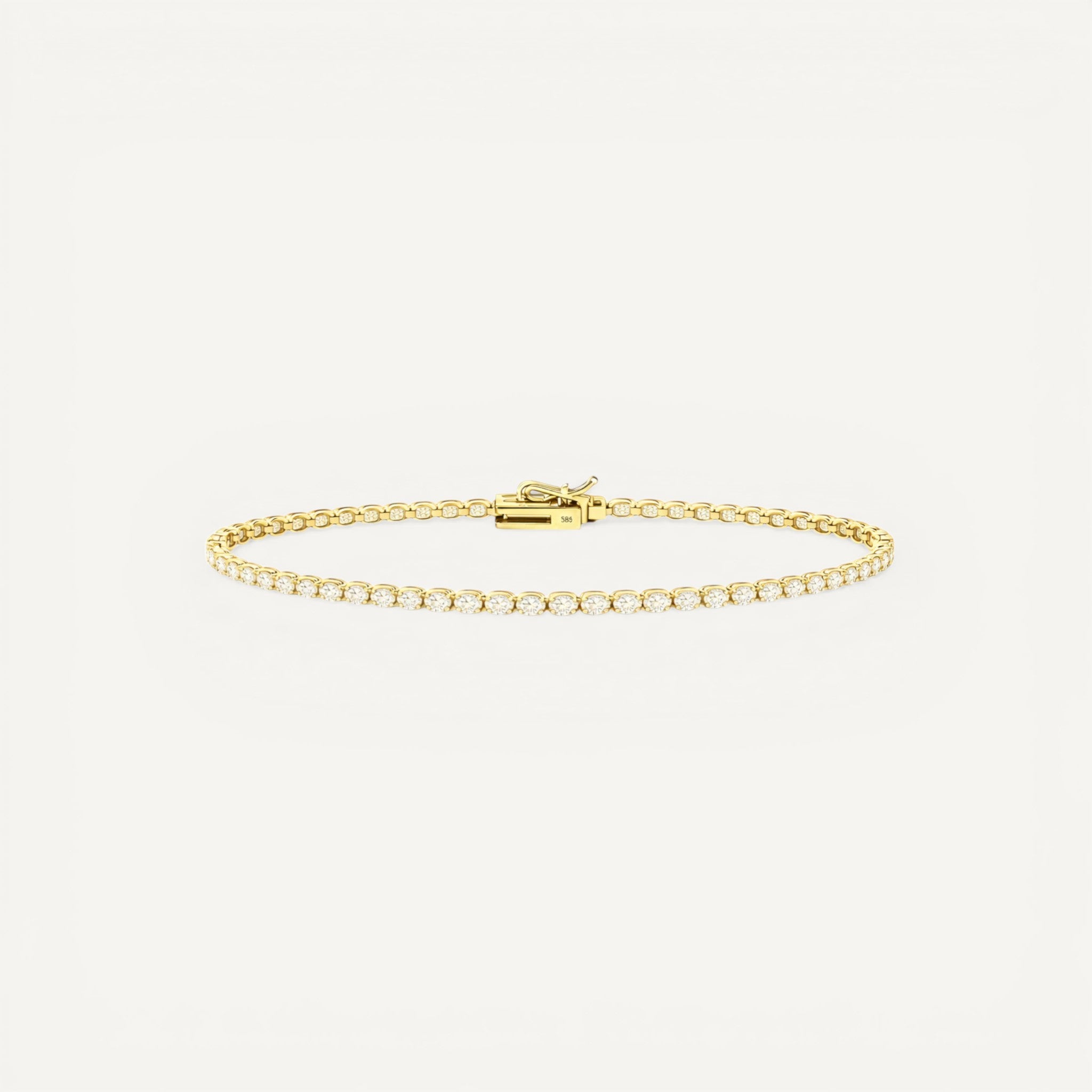
What is a tennis bracelet? The short answer: a single, continuous line of matching stones — usually round diamonds — each held in its own small setting, joined by hinged links so the whole row bends around the wrist. No pendant, no centrepiece, no interruption; the line itself is the design. The longer answer takes in a tennis champion, a dropped bracelet at the US Open, and a name that quietly replaced the older term "line bracelet" across the entire jewellery trade. This page is the definitional one: what the style is, where the name comes from, what counts and what does not, and how the same idea shows up at the neckline. If you already know all that and want buying advice, the tennis bracelet buying guide is the page you want next.

The definition, stone by stone
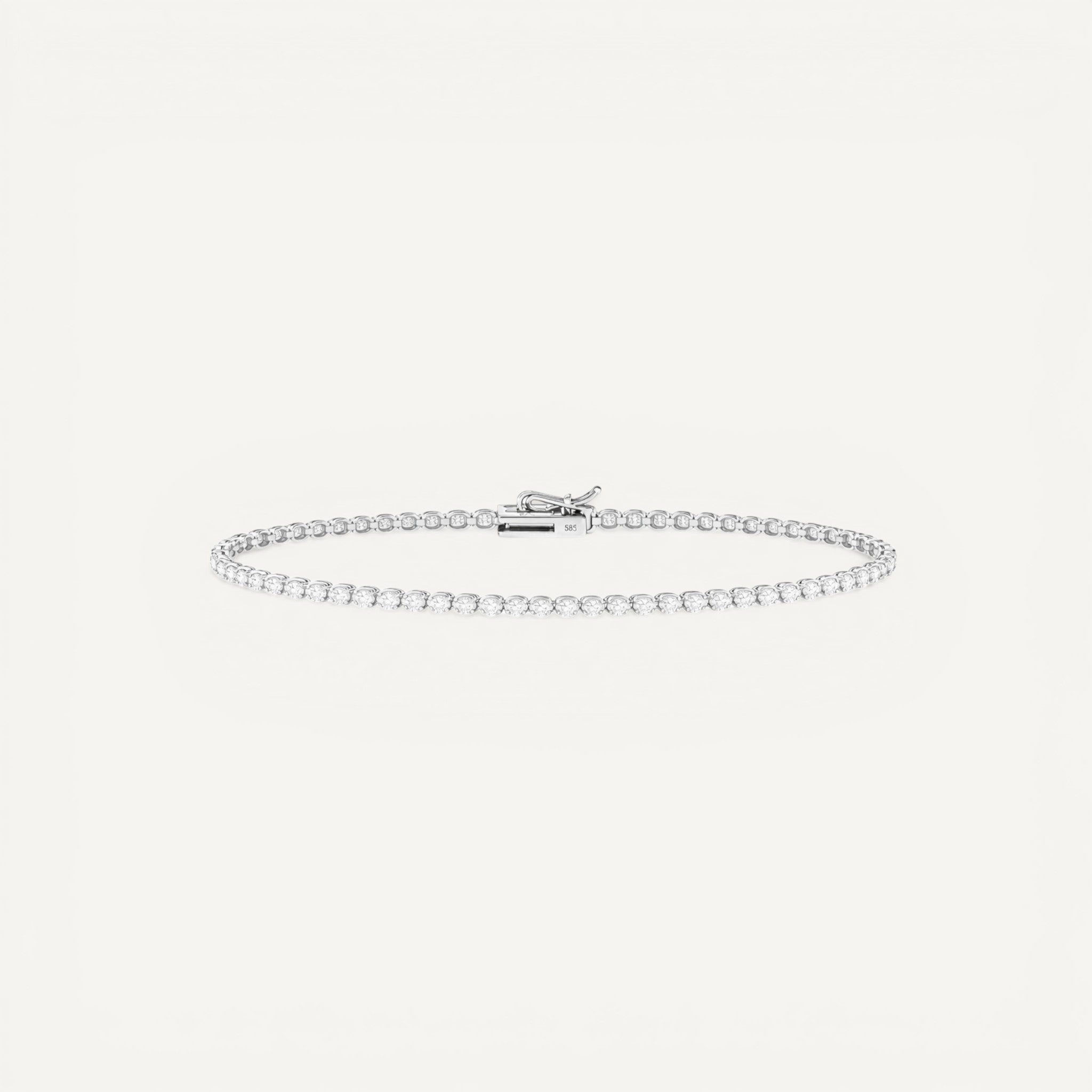
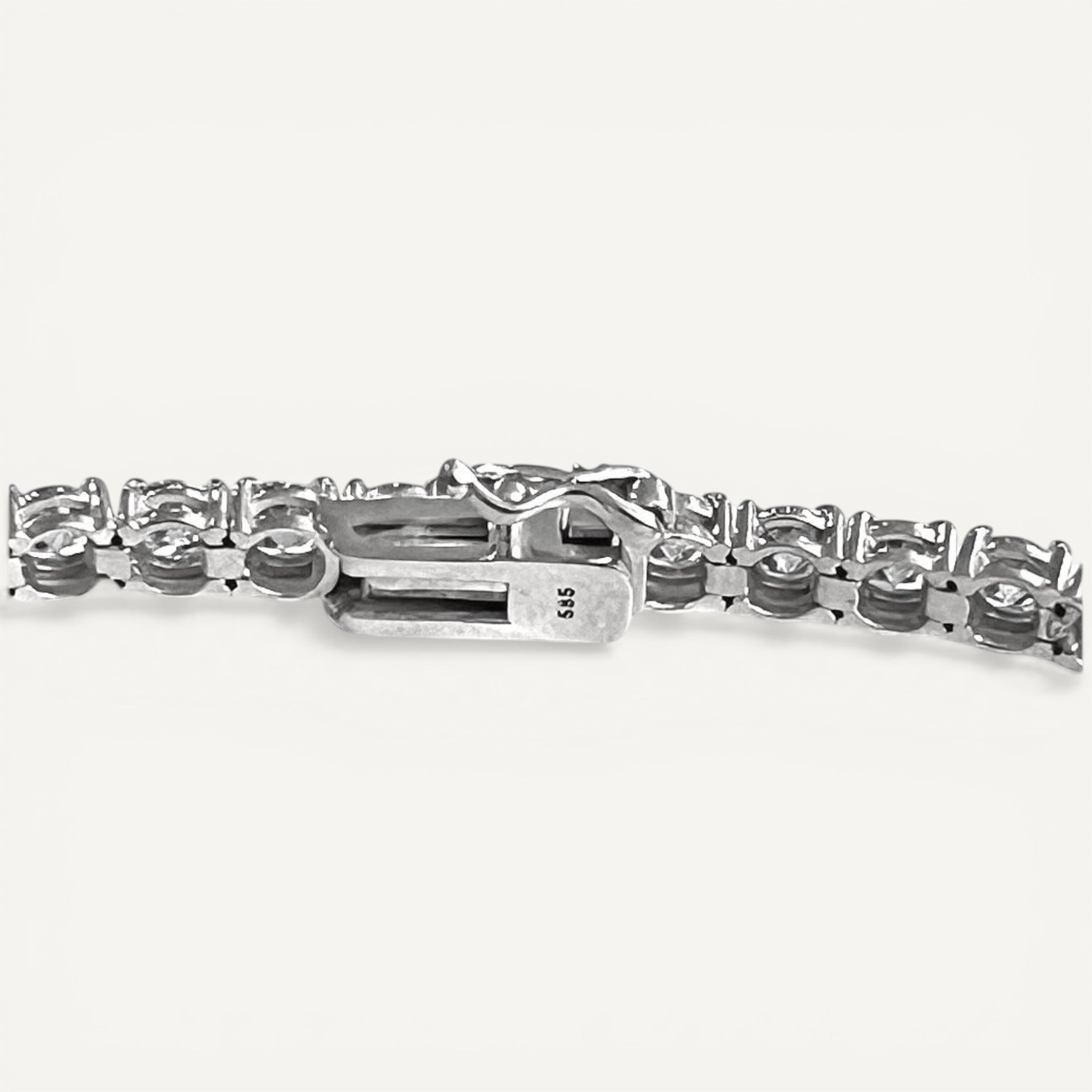
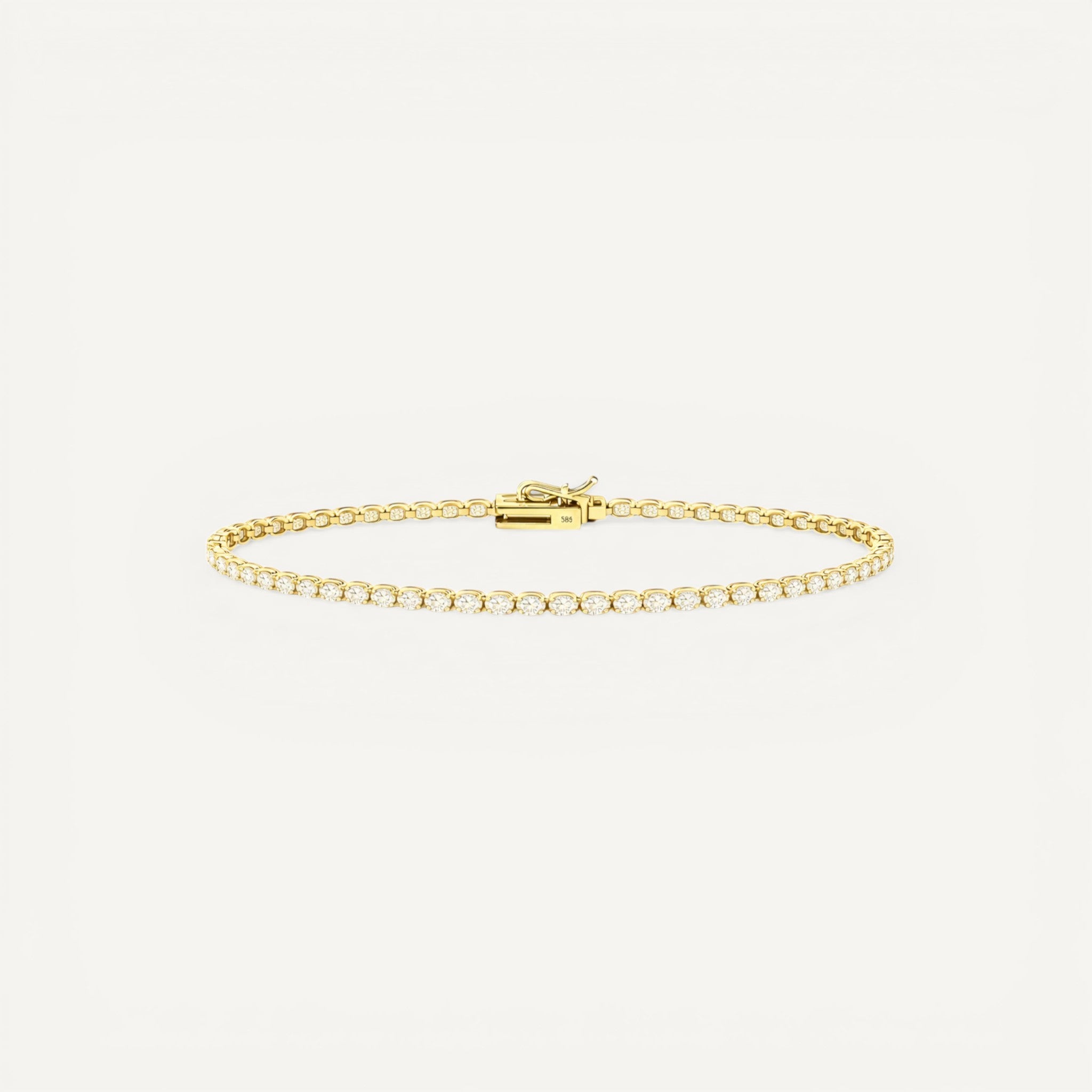
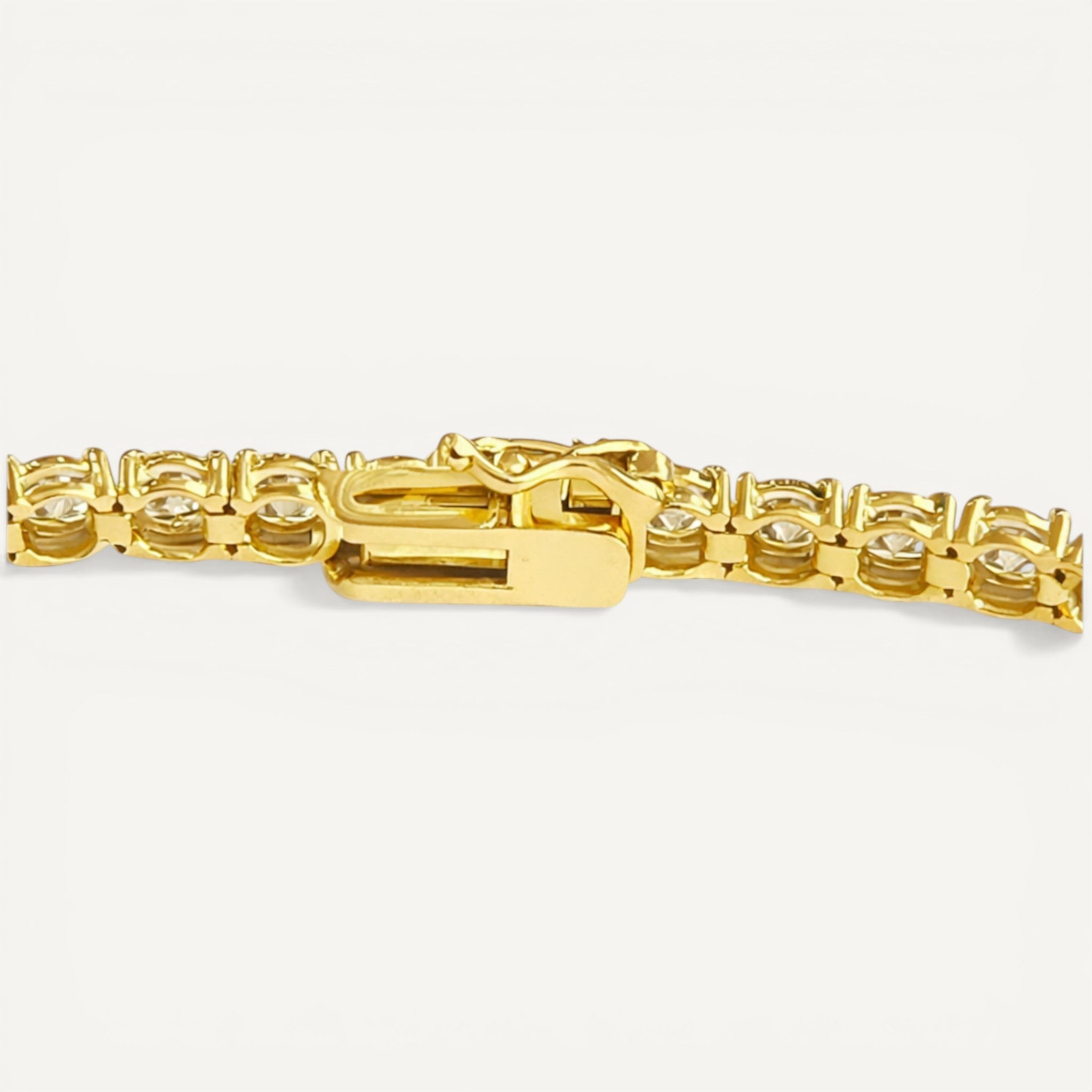
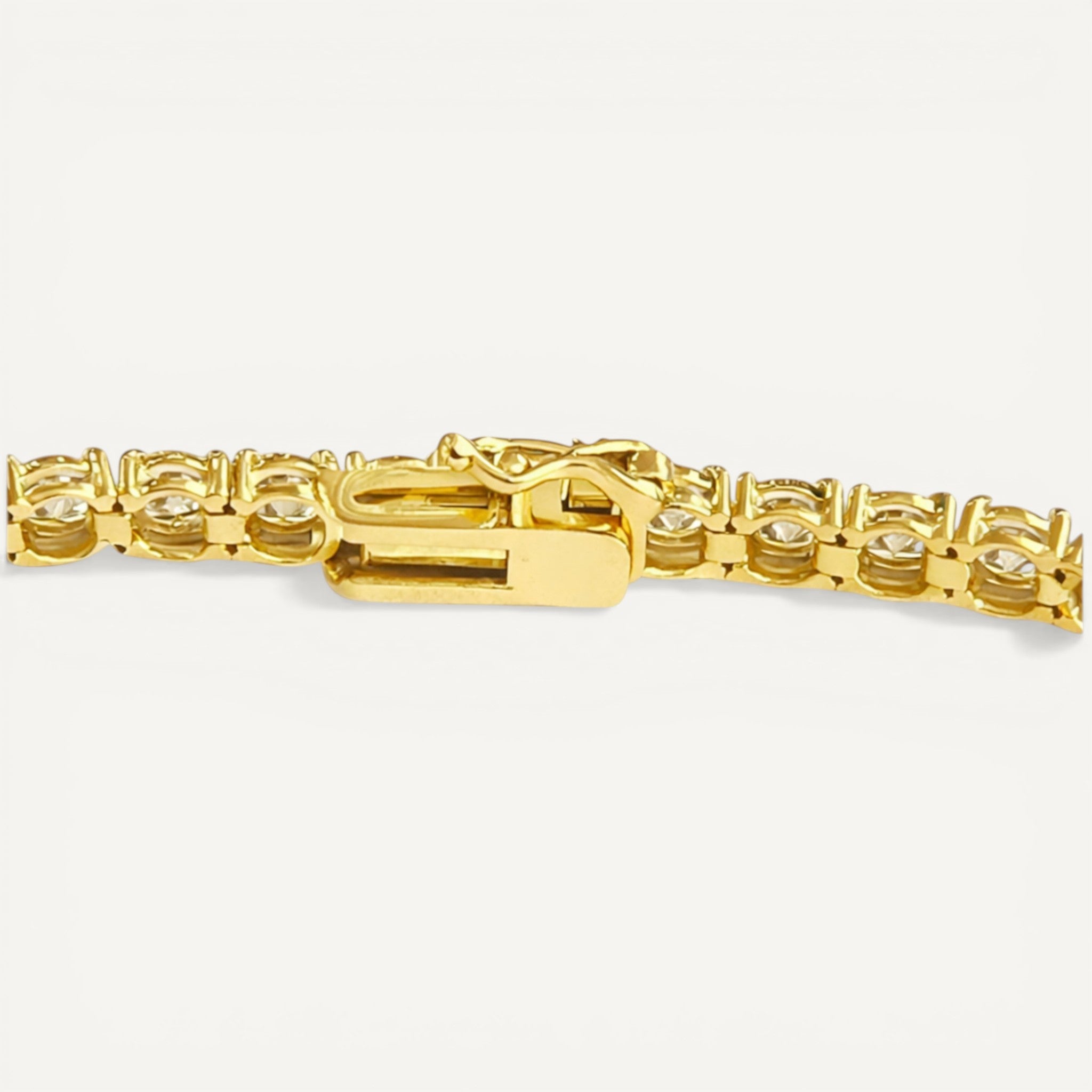
Take the bracelet apart in your head and the construction is simple. Each stone sits in its own miniature setting — a tiny metal seat with prongs or a rim to hold it. Each setting is a link, and every link is hinged to the next. Repeat that fifty or sixty times and you have a chain whose links happen to carry diamonds: rigid enough that the stones stay aligned in a row, flexible enough to follow the wrist as it moves. That flexibility is not a nicety, it is the point — a stiff row of stones would sit up off the skin, catch on everything, and stress its own settings every time the wrist bent.
Before the sport lent its name, jewellers called this construction a line bracelet or an eternity bracelet, and the necklace-length ancestor — the rivière, French for river — goes back to the eighteenth century. So the object is old. The name is not, and the story of how it changed is the rare piece of jewellery lore that involves a stoppage of play.
The Chris Evert story: how a line bracelet took a sport's name
The version told across the trade goes like this. Chris Evert — one of the most dominant players in the history of women's tennis — wore a diamond line bracelet during her matches. At the US Open, most retellings say in 1978, the clasp gave way mid-match and the bracelet slipped off her wrist onto the hard court. Evert asked the officials to pause the match until it was found; play stopped, cameras lingered, and a bracelet became a broadcast moment. Jewellers did not miss it. Within a few years the diamond line bracelet was being sold as the "tennis bracelet", and by the late 1980s the new name had effectively retired the old one.
We present that as the widely told origin rather than a court record — retellings disagree on the exact year, and the details have polished themselves with each pass, the way good trade stories do. What is not in dispute is the effect: the name stuck, the sport kept it visible, and half a century later a piece of eighteenth-century construction is named after a twentieth-century interruption.
What makes a bracelet "tennis": three tests
The name gets stretched onto a lot of jewellery it does not belong to, so it is worth being precise. A tennis bracelet passes three tests. Uniformity: the stones match — same shape, same cut, and either identical sizes or a deliberate, even graduation. Continuity: the line runs unbroken from clasp to clasp, with no bare stretch of chain, no dangling charm, no single large centre stone that turns the rest into a supporting cast. Flexibility: the stones are carried in articulated metal links that move, which is what separates the style from a rigid bangle.
Run the tests and the borderline cases sort themselves. A rigid diamond bangle fails the third test — handsome, but not a tennis bracelet. A chain with five spaced-out stones is a station bracelet; it fails continuity. A bracelet that is half pavé and half plain metal is a half-eternity design. None of this is snobbery — it is just what the word means, and knowing it keeps you from comparing objects that are built differently and priced differently as if they were the same thing.
Prong or bezel: how the stones are held
Within the definition, the biggest structural choice is the setting — the way each stone is gripped. A prong setting holds the stone with three or four small metal claws. It exposes the most stone to light, which is why prong-set rows read brightest, and it is the look most people picture when they hear the name. A bezel setting wraps a thin rim of metal around each stone's girdle instead. It shows slightly less stone, sits lower and smoother against the skin, and shields the edges — the more protective choice for a hand that spends its day in gloves, gym bags, or dishwater.
Neither is the correct answer; they are different temperaments for the same row. Our own tennis pieces come in two settings along these lines: Heritage Prong, the classic claw-set line, and Crownline, a crown-inspired setting with a sleeker, lower profile. The choice changes how the bracelet wears far more than it changes what the bracelet is.
The family: tennis necklaces, rivières and eternity bands
Move the same construction to the neck and you have a tennis necklace — an unbroken line of matched stones, typically around 17 inches, draping where a chain would sit. It is the fastest-growing branch of the family, and choosing one involves its own questions of length and stone size, which our guide to choosing a 14K gold tennis necklace walks through properly. The tennis necklaces collection shows the form in both white and yellow gold.
The rivière is the ancestor: the same river of stones, usually graduated from large at the centre to small at the clasp, in fashion since Georgian times. And shrink the idea onto a finger and you get the eternity band — a ring set with a continuous circle of matching stones. One idea, three scales: a line of identical stones, each in its own seat, with the metal doing its work quietly underneath.
Why the style has lasted
Trend cycles are unkind to most jewellery, and yet the tennis bracelet has outlived every one of them since it was renamed. The reasons are structural rather than sentimental. Because the stones are uniform, the bracelet has no front or back, no top or bottom — it cannot be worn wrong, and it cannot go out of date the way a motif can. Because the light comes from dozens of small stones rather than one large one, it reads as brightness rather than as a statement, which lets it sit beside a watch, under a cuff, or stacked with plain gold without an argument.
It also scales unusually honestly. The same design exists at 2 carats total weight and at 26, and the difference between them is not styling — it is simply more diamond. That makes it one of the few pieces people buy twice: a fine row early, a heavier one at some later anniversary, and the two do not compete because they are the same idea at different volumes.
Ours: solid 14K gold, lab-grown diamonds, disclosed
Where we stand in all this is easy to state. Every tennis piece we sell is solid 14K gold — white or yellow, all the way through, never plated — with round diamonds that are lab-grown or natural, your choice at purchase, and always labelled as what they are. Lab-grown diamonds are real diamonds grown above ground: optically and chemically identical to mined stones, graded on the same scales, and considerably more carat for the same budget. What matters to us is the disclosure, not the direction you choose — the honest comparison lives in our lab-grown vs natural diamonds guide.
Because we publish specifications the way a gold seller should, every product page states the approximate gold weight of the piece itself — our Heritage Prong Classic bracelet, for instance, carries about 7.9 to 8.9 grams of 14K gold before a single diamond is counted. Bracelets are built to a 7-inch standard fit, necklaces to a 17-inch classic length, and current CAD prices, gold weight and carat weight live on each product page.
The definition in metal: four pieces from the tennis collection
If a page of definitions has left you wanting the object itself, these four show the vocabulary above in the two settings we make. Every page publishes the carat weight, the gold weight, and the stone origin — lab-grown or natural, stated plainly.
Shop the pieces in this guide: 14K White Gold Heritage Prong Tennis Bracelet — Petite (2.5–4.5 ct tw) · 14K Yellow Gold Crownline Tennis Bracelet — Classic (3.5–4.5 ct tw) · 14K Yellow Gold Heritage Prong Tennis Bracelet — Classic (5–7 ct tw) · 14K White Gold Crownline Tennis Necklace — Petite (5–8 ct tw).
Where to go next
Knowing what a tennis bracelet is and knowing which one to buy are different problems, and this page has only solved the first. The second — how carat weight actually translates to presence on a wrist, what the four things that matter are, and how to compare two bracelets that look the same on a screen — is the whole job of our tennis bracelet buying guide for Canada, and it is the natural next page from here. If you would rather let the objects argue for themselves, the bracelets collection holds the full line-up, definitions optional.
Common questions about tennis bracelets
Why is it called a tennis bracelet?
Because of Chris Evert. The widely told story is that her diamond line bracelet broke during a US Open match — usually dated to 1978 — and play was paused while it was recovered. The moment renamed the style: what jewellers had sold as a line bracelet became the tennis bracelet within a decade.
What is the difference between a tennis bracelet and a bangle?
Movement. A tennis bracelet is built from hinged, stone-set links that flex around the wrist; a bangle is a rigid circle or oval, diamonds or not. If it bends, and the stones run in one matched unbroken line, it is a tennis bracelet.
Are the diamonds in a tennis bracelet real?
In ours, yes — every piece is set with round diamonds that are either lab-grown or natural, chosen at purchase and always disclosed as which. Lab-grown diamonds are chemically and optically identical to mined ones and are graded on the same scales; the honest difference is price per carat.
How much does a real tennis bracelet cost in Canada?
In solid 14K gold with lab-grown stones, tennis bracelets typically run from under $2,000 into five figures depending on carat weight — the current price for every tier is on its product page. The construction is the same at every tier; the difference is diamond.
Can you wear a tennis bracelet every day?
Yes, with the setting doing most of the deciding. A lower-profile setting such as a bezel — or our Crownline — shields stone edges better for hands-on days, while a prong setting shows more light and asks a little more care. Solid gold handles daily wear either way; check the clasp now and then, as Ms. Evert would advise.
Shop this guide