



If you are searching for a gold chain price in Canada, the honest answer is a range rather than a number: a solid 10K gold chain runs from a little under $250 CAD for a fine cable to about $5,000 CAD for a heavy curb at full length. That spread looks dramatic until you know what sets it. Almost all of it is one number — how many grams of gold the chain contains. Gold is a traded metal, so exact prices move with the market (in both directions; each product page carries today's figure). What does not move is the arithmetic underneath, and that is what this guide teaches: the weights behind the prices, and how to tell when a chain is priced too low to be solid gold.

What a solid 10K gold chain actually costs in Canada
Across our catalogue of solid 10K yellow gold chains, the working range is roughly $250 to $5,000 CAD. The middle of that range is where most people land. A fine everyday chain — 1.7 mm to 2.7 mm, 18 to 20 inches — sits in the few-hundred-dollar band. A chain with real presence at conversational distance — 3 mm to 4.6 mm — runs from the mid hundreds into the low four figures. A heavy statement chain at 5.6 mm and above begins in the mid four figures and climbs as width and length grow. Current prices for every width and length are on the solid gold chains collection.
Those are our prices for chains that are solid gold all the way through, priced in Canadian dollars, with no currency conversion or cross-border duty added at the door. It is worth naming the alternative: much of what turns up in a Canadian search for a cheap gold chain is priced in US dollars, or is not solid gold at all. When you compare, compare like for like — same karat, same width, same length, and ideally the same gram weight. If a listing will not tell you the grams, you cannot compare it — skip the listing.
Gold weight in grams is the price — everything else is detail
A gold chain is priced first as metal and second as a finished object. Gold trades by the gram, so the gram weight of the chain is the dominant term in what you pay. Width, length and link style all matter, but they matter because they change the gram weight. A wider chain uses more gold per inch. A longer chain uses more inches. A dense link pattern packs more gold into the same length than an open one.
You can watch this happen in a single product. Our 2.5 mm Ethos Subtle Cuban chain weighs 3.7 g at 18 inches; the same chain at 24 inches weighs 4.9 g, and its price rises in the same proportion. Nothing changed but the gold. Scale that up and the effect compounds: our 8.2 mm Veritas Majestic curb chain holds 33.2 g at 20 inches — about eight times the gold in that 2.5 mm Cuban — and its price is roughly seven times higher. The chain is not eight times more elaborate. It is eight times heavier.
The widths and weights, at true scale
Our solid 10K chains span 1.7 mm to 8.2 mm in width — and, far more importantly, from under 2 g to over 40 g in gold. Read the weight, not the width: two chains at the same width can be very different objects, and the price follows the grams. Every product page publishes the approximate gram weight for each length next to its current price, so the comparison is always available on the chains collection rather than frozen into an article.

Why two chains of the same width can differ by double
We sell two 4.5 mm chains whose gold content differs by a factor of two and a half — same width, very different objects and prices; our chain width guide shows that comparison in full. Both are solid 10K gold. The difference is geometry: a paperclip link is a long open rectangle with a lot of air inside it, while a box link is a dense square column of metal with almost none.
This is why width alone is a poor guide to price, and why a width-only comparison between two retailers tells you very little. The same logic explains our 8 mm Axis Grand oval cable chain — genuinely 8 mm across, but built from wide open oval links, so it carries about a third of the gold of an 8.2 mm curb, and its price shows it. If you want maximum visual width for your budget, open link styles give it to you. If you want density and heft in the hand, you are buying grams, and grams cost money. For which link style suits which wearer, our guide to choosing chain width, length and style covers that decision in detail.
When a gold chain price is too low to be solid gold
Run the arithmetic before you run your instinct. Divide any chain's price by its stated gram weight. Lighter chains always cost more per gram than heavy ones, because the clasp, finishing and shipping cost the same whether they accompany two grams or thirty. The figure does not need to be precise to be useful: a 20-inch chain at a genuine 5 mm in a dense link pattern holds perhaps 13 to 20 grams of gold, so a listing offering one at a low three-figure price is not selling that much solid 10K gold, and no amount of storefront design changes the metal's market price.
There are three usual explanations for a price that undercuts the metal. The chain may be hollow — formed as a tube around empty space, so it looks the same on the neck but holds a fraction of the gold and dents far more easily. It may carry a thin layer of gold over a base metal such as brass, which is a surface finish measured in microns rather than grams and will wear through at the points of contact. Or the listing quotes a weight that is not the finished piece. Every chain we sell is solid 10K gold, never plated and never hollow, and we publish the approximate gram weight for every length on every product page so the calculation is available to you. If a listing does not give you a karat, a width and a gram weight, you have not been given enough to judge the price. Our explainer on what "real gold" actually means walks through the differences in materials.
10K vs 14K: what the karat does to the price
Karat measures how much of the alloy is pure gold. 10K is 41.7 per cent pure; 14K is 58.3 per cent. That means the same chain in 14K contains about 40 per cent more pure gold than the 10K version, and its price moves accordingly — expect a meaningfully higher figure per gram for identical dimensions, not a small premium. Karat is the second-largest lever on price after weight, and it is the one buyers most often overlook when comparing two listings that both say "gold chain".
Our chains are solid 10K yellow gold, which is a deliberate choice for this category: 10K's higher alloy content makes it harder and more resistant to the scuffs and stretch that daily neck wear inflicts on a chain, and it puts a real gold chain within reach at a sane price. We do carry 14K elsewhere in the catalogue, including our diamond studs and tennis pieces — see the 14K gold collection for those. If you are weighing the two, our article on the difference between 10K and 14K solid gold lays out the colour, hardness and price trade-offs side by side.
Men's widths, women's widths, and what each typically costs
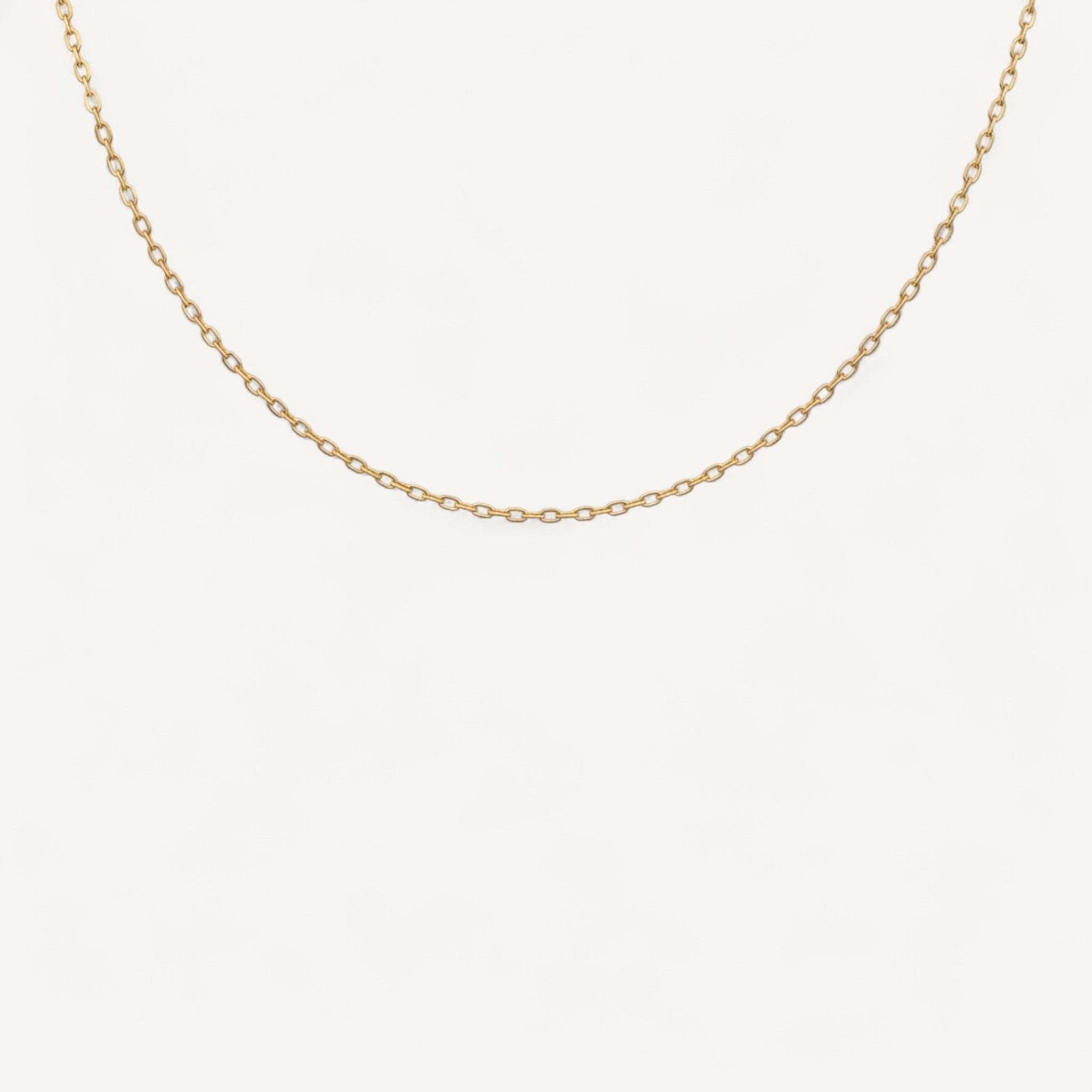
The width bands people actually buy differ, and so do the price bands that follow from them. Chains bought for women most often land between 1.7 mm and 3.2 mm, usually at 16 to 20 inches, which in solid 10K puts the realistic budget at roughly $250 to $700. Those chains are light enough to layer and to wear with a pendant, and light enough that the metal cost stays modest. Our 1.7 mm Vero Petite oval cable chain (from about $250) is the entry point; a 3.2 mm Cuban sits at the upper end of that everyday band.
Chains bought for men cluster between 4.6 mm and 8.2 mm at 20 to 26 inches, and both numbers push the weight up at once — wider gauge across more inches. That puts the realistic men's budget at roughly $1,500 to $5,000 for solid gold. The men's 4.6 mm Veritas Enduring curb chain is the most common starting point, and the men's 5.6 mm Horizon Striking curb chain shows how a more open link pattern buys more visual width per gram of gold. The full range sits in our men's jewellery collection.
Length: every extra inch is more gold
Length is the quietest line item on the bill and the one people forget to budget for. Going from 20 to 24 inches on a heavy chain is not a sizing preference, it is a purchase of several more grams of gold. On our 8.2 mm curb, 20 inches holds 33.2 g while 26 inches holds 43.3 g — the same chain, roughly a quarter more expensive, entirely because of ten extra grams.
The effect is proportionally the same on light chains but smaller in dollars: the 2.5 mm Cuban gains about a gram between 18 and 24 inches, and its price moves by the same modest fraction. The practical takeaway is to settle your length before you settle your budget, especially above 5 mm, because a four-inch change at the top of the width range can cost more than an entire fine chain does.
Four chains that anchor the range
One from each budget band. Each product page carries the current price next to the gram weight for every length — exactly the pairing this guide taught you to read.
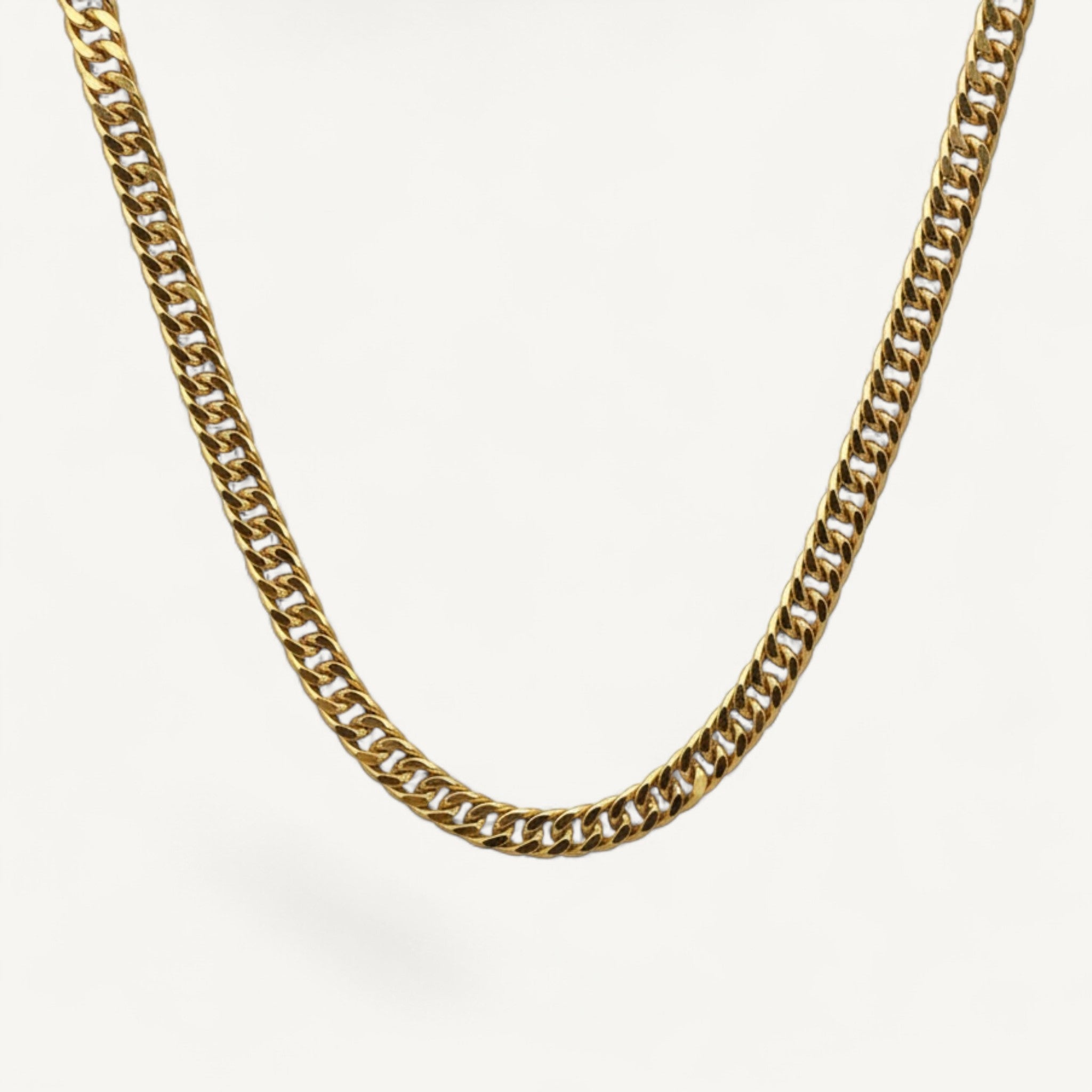
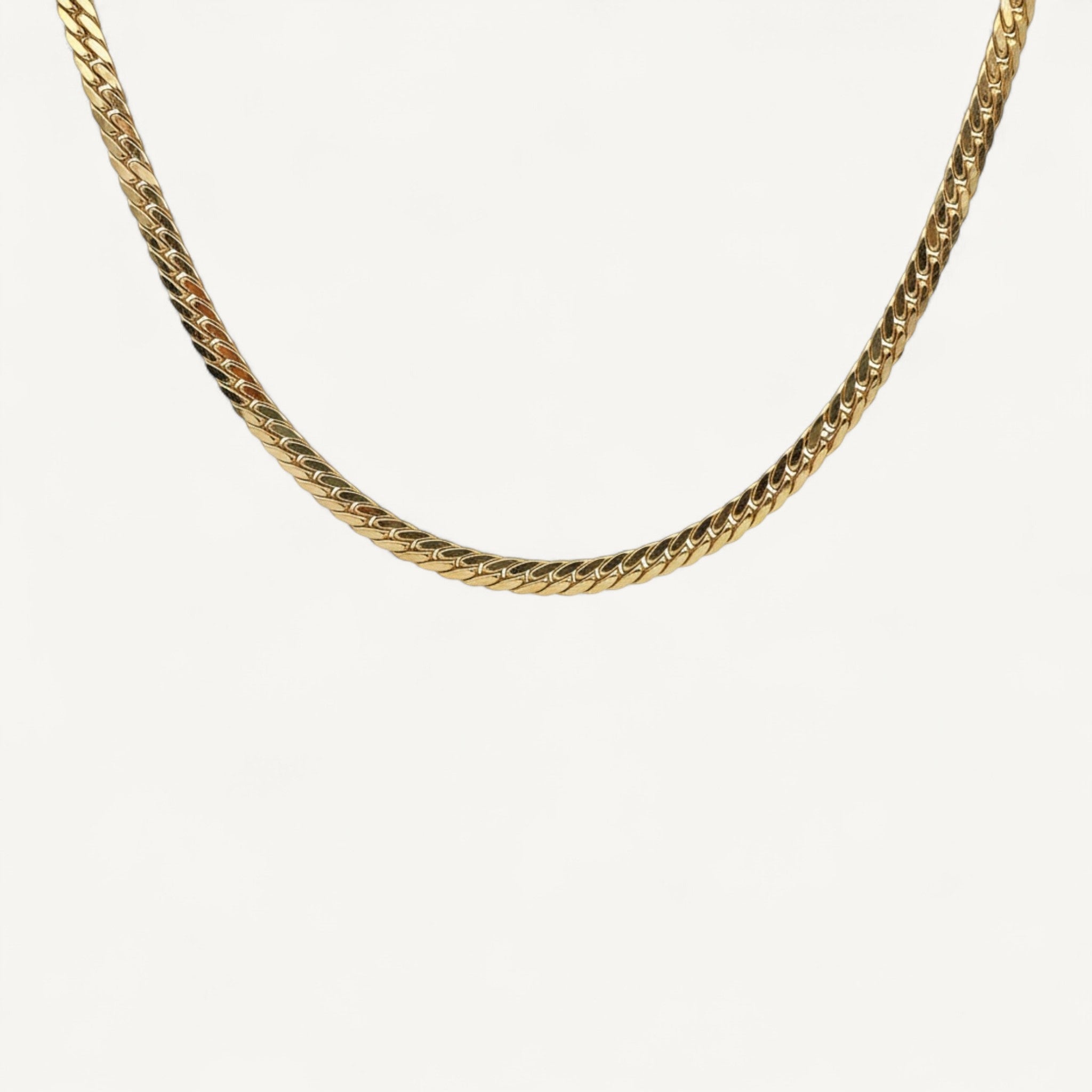
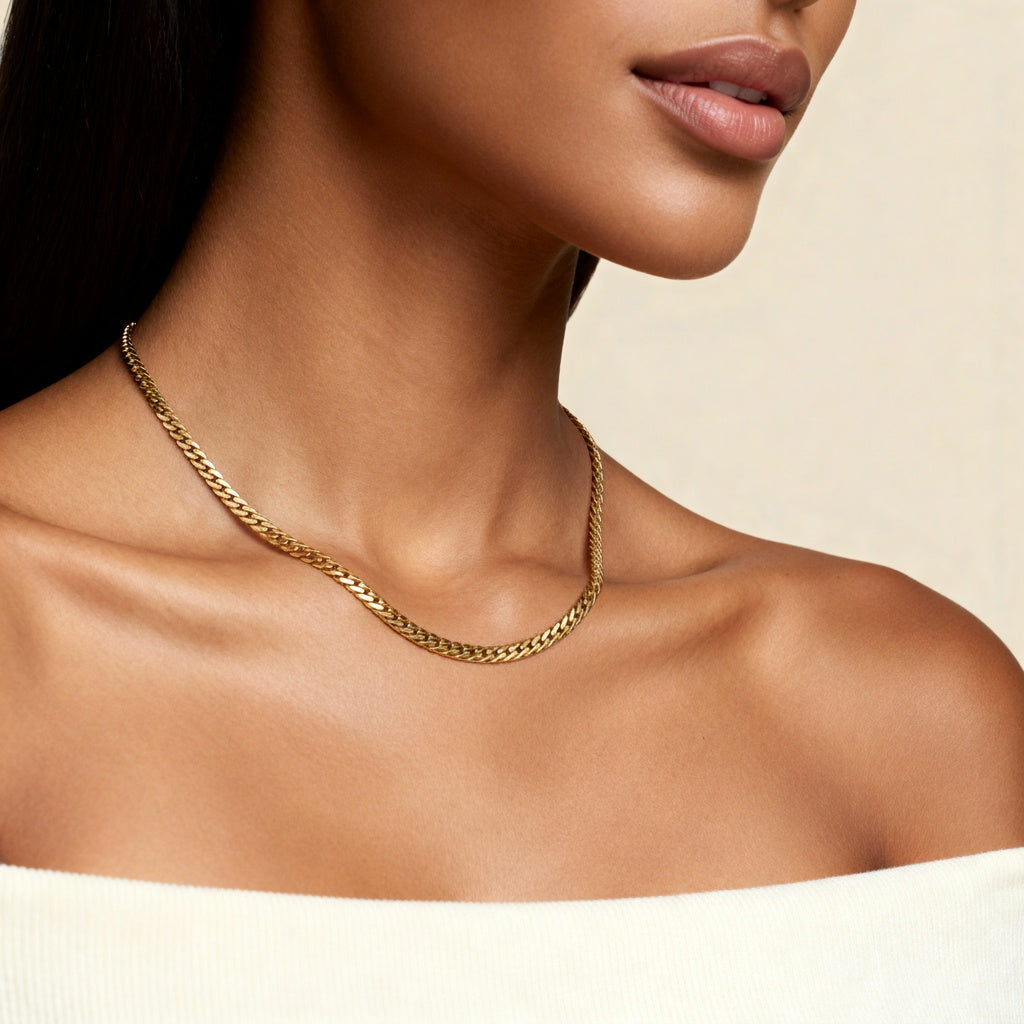
Shop the pieces in this guide: Vero Petite Oval Cable, 1.7 mm · Ethos Essence Cuban, 4.6 mm · Veritas Bold Curb, 5.8 mm · Veritas Majestic Curb, 8.2 mm.
How to choose: what to buy at each budget
Work from your budget to the width, not the other way round. Decide what you are willing to spend, then take the heaviest solid chain that fits inside it at the length you actually want to wear. A lighter chain in solid gold will outlast a wider chain that is hollow or surface-finished, and it will still be gold in ten years.
Under $600: a fine everyday chain
This band buys a genuinely solid 10K chain in the 1.7 mm to 3.2 mm range at 18 to 20 inches. The 1.7 mm oval cable (from about $250) is the least you can spend here and still own real gold; a 2.5 mm Cuban gives noticeably more presence for a few hundred more. Both work under a collar, both take a pendant, and neither will need replacing. If your budget is under $200, ask for the gram weight and check the arithmetic — or stretch to the entry chain at about $250, the least you can spend in our catalogue and still own solid gold all the way through.
$600 to $1,500: the versatile middle
This is where a chain starts to read as a deliberate choice rather than a detail. Expect 3.6 mm to 4.6 mm and 5 g to 12 g. The 3.6 mm Forma Signature rectangular cable chain and the 4.6 mm Ethos Essence Cuban chain bracket the band. If you want visible width and are relaxed about heft, an open link style stretches this budget furthest; if you want the chain to feel substantial in the hand, put the money into grams instead of millimetres.
$1,500 to $2,500: the statement band
Here you are buying weight you can feel — 13 g to 23 g, in widths from 4.6 mm to 6.8 mm. The 4.6 mm Veritas Enduring curb chain and the 5.8 mm Veritas Bold curb chain are the two most-asked-about pieces in this range. At this level, try the weight on before you commit if you can — 20 g sits differently on the neck through a full day than 6 g does, and that is a wearability question, not a budget one.
Above $2,500: heavy solid gold
Above this line you are into 6.8 mm and wider, 23 g and up, and the fixed costs all but vanish into the metal. The 6.8 mm Veritas Substantial curb chain and the 8.2 mm Veritas Majestic are the pieces that anchor the catalogue. Buy at this level for the weight and the wear, not because the price implies quality — the metal content is what you are paying for, and it is the same solid 10K gold as the entry-level chain, just a great deal more of it.
Common questions about gold chain prices in Canada
How much should I spend on a gold chain?
For a first solid gold chain worn daily, $500 to $1,000 buys a 2.5 mm to 3.6 mm chain that holds up and does not look apologetic. If you want the chain to be the visible piece of an outfit rather than a supporting detail, the honest floor is around $1,500, because that is where solid gold in a 4.6 mm-plus width begins. Very light solid chains do exist under $200 — at that price, ask for the gram weight and run the too-cheap check before assuming the listing is honest.
Why is one gold chain so much more expensive than another of the same width?
Because width does not determine gold weight. A dense box or curb link packs several times more metal into the same width than an open paperclip or cable link. Our two 4.5 mm chains differ by a factor of two and a half in gold weight for exactly this reason. Always compare gram weight, not millimetres.
Is a 10K gold chain worth buying, or should I save for 14K?
For a chain specifically, 10K is the more practical choice. It is harder than 14K, which matters for a piece that moves against skin and clothing all day, and it lets you buy more width for the same money. 14K makes more sense where colour saturation matters most, such as settings and studs.
Do gold chain prices in Canada change?
Yes. Gold is a traded commodity, so retail prices move with the metal market, and that is why this page gives ranges and mechanisms rather than a rate card — the product pages carry today's prices. The relationships hold even when the absolute numbers move: weight drives price, karat scales it, and a price far below the metal value means the piece is not solid gold. Why they move — in both directions — is covered in our guide to why gold jewellery prices change.
What length should I budget for?
Most women's chains sit at 16 to 20 inches and most men's at 20 to 24 inches. Decide the length first, because on wider chains each additional inch adds real grams and real cost — a meaningful fraction of the price between a 20-inch and a 26-inch heavy curb. Our guide to chain width, length and style covers how to pick the drop for your build.
Magasinez ce guide


En lire plus
Buying gold jewellery online in Canada has a moment nobody designs for: the cart is full, the checkout is open, and you stop — because the brand is small, you have never stood in its shop, and the ...
If you have followed gold jewellery prices in Canada for any length of time, you have watched numbers do something jewellery is not supposed to do: change. The same solid gold chain can cost more t...