



If you want to know how to tell if gold is real, you do not need a chemistry set. You need five checks, run in order, on the piece in front of you — a chain you inherited, a gift that came without a receipt, or a purchase you are second-guessing. Each check takes a few minutes, none of them damages the piece, and each one eliminates a different kind of fake. This guide walks through all five — a magnet, the karat stamp, a kitchen scale, the wear points, and the tests a jeweller runs — and ends with an invitation: run every one of them on our own chains the day yours arrives.

Why one test is never enough
No single at-home test proves a piece is gold. Each one can only rule out a particular kind of fake: the magnet catches steel cores, the scale catches light base metals and hollow construction, the stamp catches pieces that were never marked, and the wear points catch coatings that have started to give themselves away. A convincing fake is built to pass one check, so the method is to stack all five and let each one interrogate a different property of the metal.
The same logic tells you which popular tests to skip. Biting a piece dents soft gold and proves nothing a scale cannot. Bleach and vinegar can stain or pit the surface and still leave you guessing. And home acid kits etch whatever they touch — acid testing is a real method, but it belongs on a jeweller's test stone, in trained hands, which is where check five sends you. Everything below is non-destructive.
Check 1: The magnet test
Solid karat gold does not respond to a magnet. An ordinary fridge magnet is usually too weak to tell you much; a small neodymium magnet from a hardware store, held against the length of the piece, is the better tool. If the piece snaps toward it, there is steel or iron inside — often a base-metal core under a gold-coloured surface — and the question is answered on the spot.
The caveat matters as much as the test. A piece that ignores the magnet has not passed anything yet, because most metals used in convincing fakes — brass, copper, zinc, even silver — are just as non-magnetic as gold. Two practical notes: test the links, not the clasp, since many clasps carry a tiny steel spring that will tug on a magnet even on a genuine chain; and remember that this check can only fail a piece, never pass one. It is the first filter, not the verdict.
Check 2: Find the karat stamp
Solid gold jewellery usually carries a small stamped quality mark. On a chain or bracelet it usually sits on the flat tag beside the clasp; on a ring, inside the band; on earrings, the post. The number is the gold content in parts per thousand: 417 is 41.7 per cent pure gold, which is 10K, and 585 is 14K. Some pieces are stamped 10K or 14K directly. The mark is often a millimetre tall — a phone camera zoomed all the way in reads it far better than the naked eye. In Canada these marks fall under the Precious Metals Marking Act, which is why a stamp carries more weight than anything printed on a box.

Read the stamp alongside the other checks, not instead of them. Stamps can be forged, and a coated piece is sometimes stamped with the karat of its thin surface layer alone, so a mark by itself settles less than people assume. Absence is a question to ask, not proof of a fake — marking is voluntary in Canada — but a piece sold as solid gold with no stamp anywhere deserves the rest of this list run against it with extra attention. And if what you actually want to know is whether a 417 stamp is good — how 10K compares to 14K in durability and colour — that is a different question, answered honestly in our article on whether 10K gold is good.
Check 3: Weigh it on a kitchen scale
Gold is dense, and density is the property a fake finds hardest to imitate. A 10K alloy comes in around 11.6 grams per cubic centimetre; brass, the usual body of a gold-coloured copy, is around 8.5. Same size, roughly a quarter less weight — a difference a $15 pocket scale that reads to 0.1 g can see easily. A piece that feels light for its size, or a chain that weighs far less than its dimensions suggest, is telling you what it is made of.
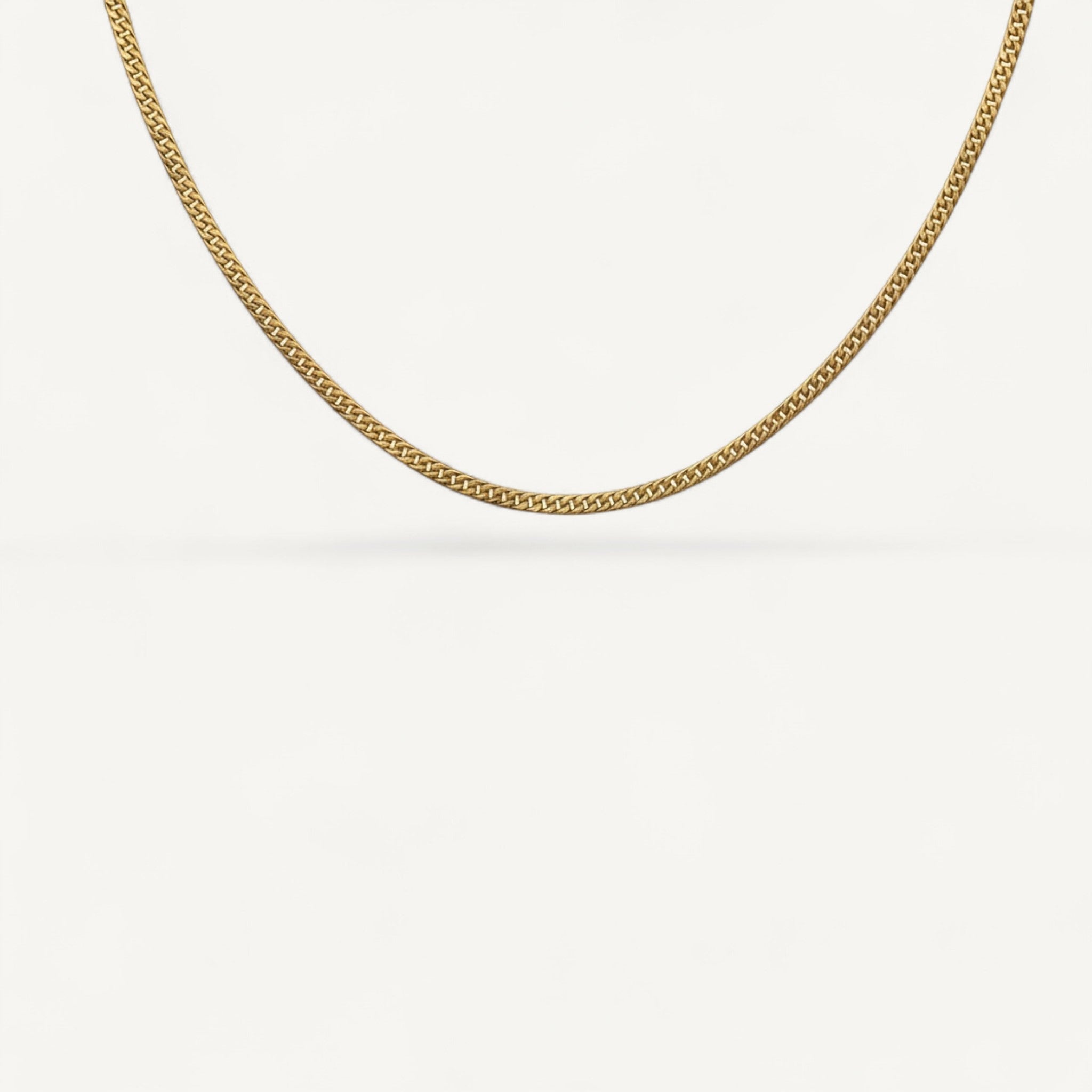
The check is sharpest when there is a published number to compare against. Some sellers state the gram weight of each piece; weigh yours and the two figures should agree within a few tenths of a gram. We publish the approximate weight for every length on each chain's page — our 2.5 mm Ethos Subtle Cuban chain, for example, lists about 4.0 g at 20 inches, so a scale can confirm the listing in ten seconds. No published number and no way to get one? Move on: everywhere else in the gold world, the metal changes hands by the gram.
Check 4: Read the colour at the wear points
A coating over base metal is thin — ordinary gold plating is often under a micron — and it wears through first wherever metal rubs: the clasp end of a chain, the outer edges of links, the back of a pendant, the inside of a ring band. Look at those spots in daylight. A different colour showing through — silvery, grey, or coppery — means the gold was only ever a surface. Solid gold is the same alloy all the way through, so a worn edge or a fine scratch exposes more of the same colour, just brighter where it is freshly polished.
Time is the honest referee here. Solid gold can dull under skin oils and soap, but a soft cloth brings the same colour back; a piece that has gone visibly two-toned has already answered the question. Green or dark marks on your skin point the same direction — they usually mean high-copper base metal at the surface — though they are suggestive rather than conclusive. For the full picture of how coated constructions are built and how each one ages, our comparison of solid gold and every coated construction goes into the layers in depth.
Check 5: When to hand it to a professional
If the first four checks leave doubt — or the piece is heavy enough that the answer is worth real money — the fifth check is a jeweller, and it usually costs little. Two tests are standard. The acid test draws a faint line of metal from the piece onto a test stone and touches graded acids to it; done properly by a jeweller, the mark on the piece itself is negligible. X-ray fluorescence, or XRF, is the modern default: a benchtop instrument reads the alloy's composition in about a minute, touches nothing, and many jewellers and gold buyers will run it while you wait, often for free.
One caveat worth knowing before you go: XRF reads the surface, so an unusually thick coating over base metal can fool a surface-only reading. A careful tester pairs the reading with a weight-and-dimensions sanity check, exactly the arithmetic you already ran at home in check three. That is the quiet theme of this whole list — the professional instruments confirm what the stack of simple checks already suggested, and a piece that passed all four at your kitchen table very rarely surprises the machine.
Test ours the day it arrives
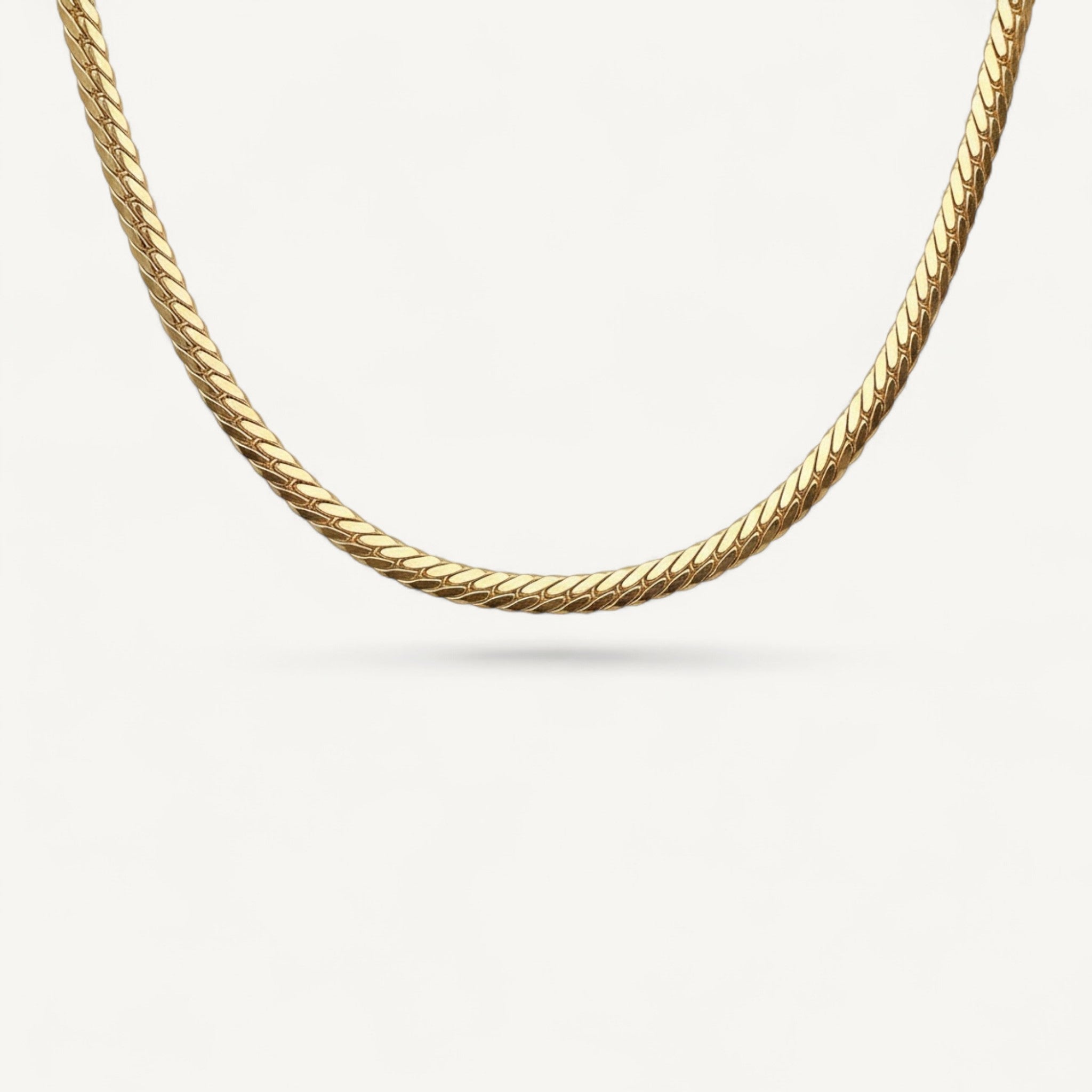
Everything above works on any gold, from any seller, and we would rather you use it than take our word for anything. Every chain page in our catalogue publishes the approximate gram weight for every length we sell, next to the width and the karat — which means the day your chain arrives, the whole list is runnable at your kitchen table. Slide a magnet along the links: nothing should happen. Find the 417 stamp on the clasp tag with your phone camera. Put the chain on a 0.1 g scale and compare it to the published number for your exact length — a 20-inch 4.6 mm Veritas Enduring curb chain should read about 13.6 g. Keep the tags attached while you test — the return terms require them; note the tag's small extra weight when you read the scale. Check the colour at the clasp and the link edges: solid 10K, one metal, one colour.
And if you want the definitive answer, take it to any jeweller for an XRF reading — our returns window is 30 days from delivery, which is more than enough time for every test on this page. If the chain fails any check, send it back. We publish the numbers because we expect you to check them; every piece in the solid gold chains collection carries its weights for exactly this reason.
Shop the chains that publish their numbers
Four pieces from our catalogue, each with the karat, width, and per-length gram weight stated on its page — so every one of them arrives ready to be tested against its own listing.
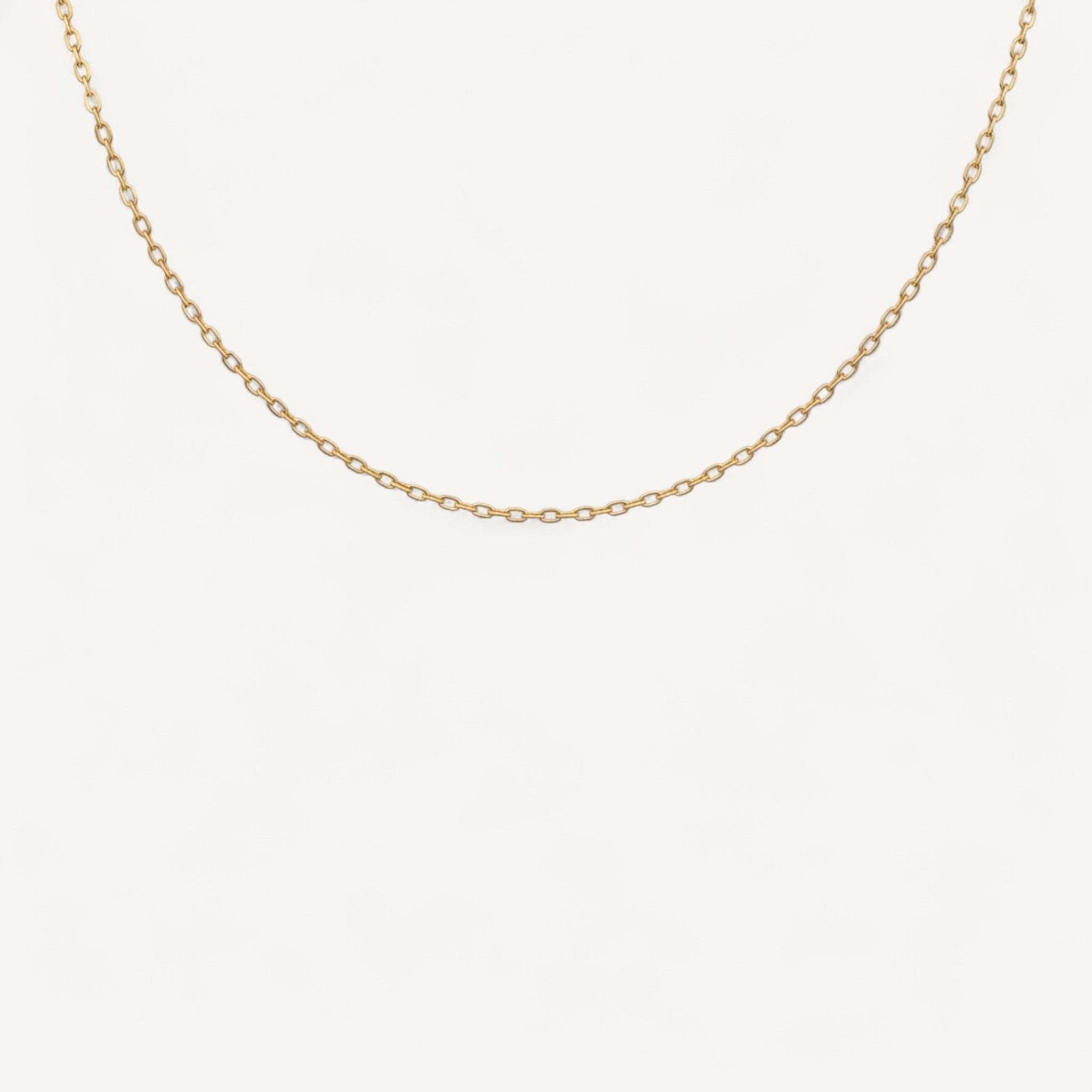
Shop the pieces in this guide: 10K Yellow Gold Vero Petite Oval Cable Chain Necklace · 10K Yellow Gold Ethos Subtle Cuban Chain Necklace · 10K Yellow Gold Veritas Enduring Curb Chain Necklace · 10K Yellow Gold Verve Substantial Box Chain Necklace.
The bottom line
Run the checks as a stack, in order, and let each one do its one job: the magnet fails steel, the stamp names the karat, the scale tests the density, the wear points expose coatings, and a jeweller's XRF settles whatever is left. A piece with something to hide rarely survives the first three — and a piece that passes all five is, for practical purposes, exactly what it says it is. Most jewellers — the shop in your neighbourhood included — pass these checks without blinking; the checks exist so you never have to wonder which kind you are dealing with. If the piece in question is one you have not bought yet, the same logic applies in advance: prefer sellers who publish the gram weight — it is on each of our product pages beside every length. That is the standard we hold ourselves to, and the reason this article ends with an invitation instead of a promise: order the chain, get out the scale, and check.
Common questions about testing gold at home
Is real gold magnetic?
No — solid karat gold does not respond to a magnet, and a piece that snaps to one contains steel or iron. But a non-magnetic result alone proves nothing, because brass, copper, zinc and silver are also non-magnetic. Use the magnet as a first filter and stack the other checks on top.
Can fake gold have a karat stamp?
Yes. Stamps can be forged, and a coated piece is sometimes stamped with the karat of its thin surface layer alone. That is why the stamp is read together with the magnet, the scale and the wear points — and why a piece with no stamp at all, sold as solid gold, deserves extra scrutiny.
Does the vinegar or bleach test work on gold?
Skip both. Household chemicals can stain or pit a piece and still leave the question open. Real acid testing uses graded acids on a test stone and belongs at a jeweller's bench; at home, the magnet, stamp, scale and wear-point checks tell you more without touching the surface.
How do jewellers test if gold is real?
Two standard methods: an acid test on a test stone, and XRF — X-ray fluorescence — which reads the alloy's composition in about a minute without touching the piece. Many jewellers and gold buyers will run an XRF while you wait, often for free.
How can I test a gold chain without damaging it?
Every check on this page is non-destructive: a magnet along the links, a zoomed phone photo of the stamp on the clasp tag, a 0.1 g scale against the seller's published weight, and a daylight look at the clasp and link edges. XRF at a jeweller is also non-destructive if you want a definitive reading.
Shop this guide



Read more
How to Layer Gold Necklaces: A Practical Guide Knowing how to layer necklaces sounds like it should be simple. Pick two chains, put them on. But if you've ever ended up with a tangled knot at th...
Buying gold jewellery online in Canada has a moment nobody designs for: the cart is full, the checkout is open, and you stop — because the brand is small, you have never stood in its shop, and the ...